
You know that moment when someone tells you their “totally secret tech” is the best deck in cEDH… and then they lose to the same Silence they “weren’t worried about”? Yeah. Let’s use actual data instead.
TLDR
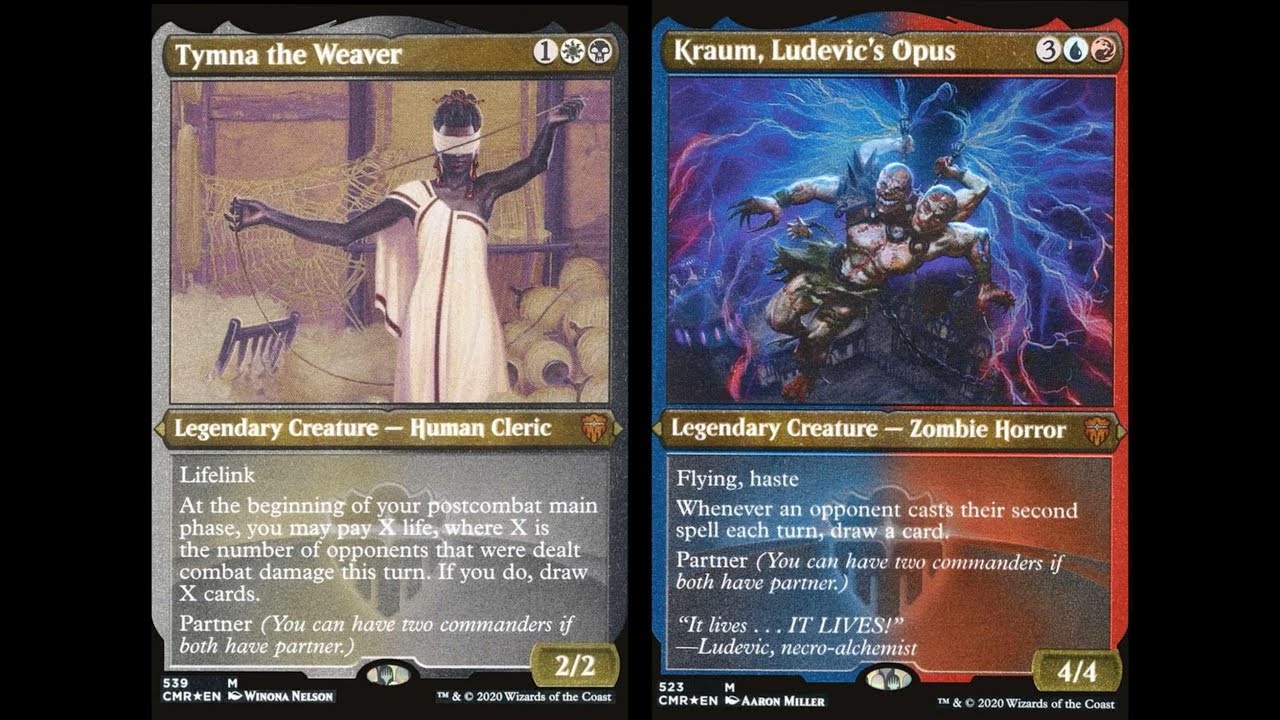
- Blue Farm (Tymna/Kraum) is still the “default boss” of the format, both popular and efficient.
- 2025 was turbo-friendly, with fast Grixis shells (RogSi) and spell-based combo (Ral, Stella Lee) showing up hard.
- Toolbox commanders like Sisay keep proving that “complicated” can also mean “consistent.”
- If you’re picking a deck to learn cEDH, start with something you can pilot cleanly. A “tier 1” list you misplay is secretly a tier 4 list.
- These rankings use EDHTop16 tournament data (rolling one-year view, large events, minimum entry threshold), so it’s a snapshot, not a sacred tablet.
Intro
This post helps cEDH-curious Commander players decide what decks actually performed by explaining who converted into top cuts most often, so you can pick a deck (or a matchup plan) with fewer vibes and more receipts.
What are we ranking? The “best” decks here means highest conversion rate in large tournaments. Conversion rate is basically “how often this commander makes top cut compared to how often it shows up.” It’s not perfect, but it’s a very good first filter when you’re trying to separate “popular” from “actually winning.”
Criteria and how this list was built
We used EDHTop16’s metagame breakdown with filters aimed at “real” competitive results:
- Time period: One year (rolling view that largely captures the 2025 season)
- Tournament size: 60+ player events
- Minimum presence: 120+ entries (so we’re not crowning a deck because it spiked one weekend)
- Sort: Conversion Rate
One important note: conversion rate is great, but it can still be skewed by who is piloting a deck (high-skill niche decks can look scarier than they feel across the whole field). So we’ll talk why each deck is here, not just paste numbers and call it a day.
The Top 10 cEDH Decks of 2025
10) Stella Lee, Wild Card
Conversion: 18.25%
Top cuts: 23
Entries: 126
Stella Lee is the kind of commander that makes you reread the card, then reread your hand, then quietly realize you might be dead to a “random” common you haven’t cared about since 2011.
The headline is that Stella can turn a small set of cheap spells into one-card engines that effectively draw your deck or generate lethal lines. That means Stella isn’t just “Izzet spells,” it’s Izzet spells with an absurdly compact win package, which is exactly what you want when the table is trying to end the game before you untap a fourth land.
Common win vibes:
- “Cast a cheap untap/draw spell, loop value, draw the deck”
- Convert that into a deterministic kill (often via storm-style payoffs or a clean combo finish)
Who should play it: You like tight sequencing and you don’t panic when you have 14 triggers and 2 mana floating. (Some people call that “fun.”)
9) Kinnan, Bonder Prodigy
Conversion: 18.38%
Top cuts: 194
Entries: 1055
Kinnan continues to be the poster child for “I did not come here to pay retail for my mana.”
Kinnan does two things cEDH loves:
- Makes your fast mana even faster
- Turns infinite mana into a win without needing extra cardboard in hand
Kinnan’s best versions are built to assemble infinite mana (often with compact artifact lines), then use Kinnan’s activated ability (or a similar outlet) to slam game-ending creatures and close.
What makes it strong:
- Your “fair” starts are still unfair
- Your “unfair” starts are downright criminal
- You get resilience by playing a proactive game that still has interaction
Who should play it: You want a proactive combo deck with a clear plan that rewards reps, not galaxy-brain stack gymnastics.
8) Dargo, the Shipwrecker / Tymna the Weaver
Conversion: 18.43%
Top cuts: 33
Entries: 179
Mardu fans, rejoice. You can still win games without pretending Rhystic Study is a personality trait.
Dargo/Tymna leverages Dargo’s cost reduction plus a pile of sacrifice and treasure-adjacent nonsense to create explosive turns, while Tymna keeps the deck from running out of gas when the first attempt gets checked.
This deck’s big sell is flexibility. It can try to end the game early, but it can also pivot into a mid-game where it keeps presenting threats and refilling.
Common win vibes:
- Cost reduction loops and sacrifice lines that generate mana
- Compact combo finishes backed by Tymna-fueled card flow
Who should play it: You like speed, you like pressure, and you enjoy telling the table “no” with cards that are not blue.
7) Rograkh, Son of Rohgahh / Thrasios, Triton Hero (RogThras)
Conversion: 19.37%
Top cuts: 136
Entries: 702
RogThras is the embodiment of “my commander costs 0, and I would like to start the game with a discount.”
Rograkh being free turns on a bunch of commander-dependent cards and early mana patterns, while Thrasios gives you the best safety valve in the format: a mana sink that becomes card advantage that becomes inevitability.
This deck thrives when it can get ahead on mana and then force the table into awkward spots where every interaction traded still leaves the RogThras player with more resources.
What makes it strong:
- Explosive openers
- Thrasios lets you grind through hate instead of folding to it
- The deck can adapt to pods that are faster or slower
Who should play it: You want a deck that can race, but you also want an “oops, we’re in turn 6” plan that still wins.
6) Kenrith, the Returned King
Conversion: 20.00%
Top cuts: 27
Entries: 135
Kenrith is the five-color “I can do anything” commander that actually backs it up.
Kenrith’s biggest strength is that his text box is basically a Swiss Army knife. In cEDH terms, that means he is excellent at turning infinite mana into a win, excellent at stabilizing weird games, and excellent at playing the best cards from every color because… well… he’s five colors.
Kenrith decks tend to sit in the midrange-control zone, picking their spots and leveraging flexibility to punish pods that are too linear.
Common win vibes:
- Generate infinite mana, then Kenrith turns it into cards, creatures, haste, and lethal
- Assemble a compact combo line with broad tutor access
Who should play it: You want options. Lots of options. Maybe too many options. (Your deck has a decision tree, not a game plan.)
5) Thrasios, Triton Hero / Yoshimaru, Ever Faithful (DogThras)
Conversion: 20.41%
Top cuts: 39
Entries: 191
Yes, the deck with the dog is good. cEDH is a serious format.
DogThras takes the Thrasios “infinite mana equals inevitability” core and pairs it with white’s ability to force a clean combo turn using silence-style protection and disruptive hatebears.
Yoshimaru looks cute, but the real point is that it’s a cheap, legendary body that supports fast development and pressure while you set up the real endgame: Thrasios doing Thrasios things.
What makes it strong:
- You get access to the best protective tools in white
- You can pressure life totals while staying interactive
- You have a clean late-game engine in the command zone
Who should play it: You like proactive midrange that can still slam the door with protection up.
4) Sisay, Weatherlight Captain
Conversion: 21.33%
Top cuts: 109
Entries: 511
Sisay decks are what happens when someone looks at the word “legendary” and says, “Cool, I’ll tutor my entire deck directly onto the battlefield.”
This archetype is a toolbox combo engine. Sisay doesn’t just find one missing piece, she finds the exact piece for the board state, and then chains into the next one. It’s flexible, resilient, and absolutely miserable to play against if you don’t know what matters.
Common win vibes:
- Assemble legendary engines that generate mana and untaps
- Chain tutors into a deterministic combo finish
- Use legendary hate and interaction to slow the table while you build
Who should play it: You enjoy mastery. Sisay rewards reps more than almost anything else on this list.
3) Rograkh, Son of Rohgahh / Silas Renn, Seeker Adept (RogSi)
Conversion: 21.96%
Top cuts: 105
Entries: 478
RogSi is turbo Grixis at its cleanest. It is fast, it is ruthless, and it absolutely will punish pods that keep hands like “land, tapped land, value engine, good luck.”
Rograkh being free is a huge deal for early mana and commander-dependent interaction, while Silas mostly exists to unlock colors and provide occasional grind lines. The deck’s identity is simple: resolve a huge draw spell, convert cards into mana, convert mana into a win.
What makes it strong:
- It compresses the game
- It forces interaction early and often
- It rewards tight mulligans and fearless lines
Who should play it: You want to learn what “turbo” really means, and you are comfortable being the archenemy on turn 2.
2) Ral, Monsoon Mage (and friends)
Conversion: 22.02%
Top cuts: 50
Entries: 227
Ral is the storm player’s love letter to bad decisions that somehow work out.
This is a spell-based combo deck that aims to flip Ral, generate obscene velocity, then chain through the top of the deck with payoff spells and recursion. When it’s humming, the deck feels like you’re playing solitaire with a judge watching. When it bricks, it bricks in a very public way.
That volatility is the cost of being one of the faster decks in the format. The reward is that you often don’t care what the table’s “plan” was, because you are asking a simpler question: “Do you have it right now?”
Common win vibes:
- Flip Ral, then snowball advantage off the top
- Recursion engines (graveyard recast effects)
- Storm payoffs to end the table immediately
Who should play it: You like storm. You like math. You like living at 1 life behind a Necropotence player and still feeling favored.
1) Kraum, Ludevic’s Opus / Tymna the Weaver (Blue Farm)
Conversion: 26.02%
Top cuts: 408
Entries: 1568
Blue Farm is still the deck you measure everything else against. If you want a single list that is fast, interactive, consistent, and capable of grinding, this is the one.
The shell is brutally efficient: high-impact draw engines, the best interaction suite, and compact win conditions. When the deck doesn’t win quickly, it pivots into “draw cards, make land drops, invalidate your plan” mode with commanders that actually matter.
Why it’s #1:
- It can win early without folding to interaction
- It can play long games without feeling clunky
- It’s not locked into one line, which makes it hard to hate out
Who should play it: You want the “default best deck” and you’re willing to learn it properly. Blue Farm is powerful, but it’s not autopilot.
What these results say about 2025 cEDH
A quick read of the list tells you the story:
- Turbo and speed are real. RogSi and Ral don’t place this high by playing fair.
- Command-zone card advantage still matters. Tymna, Thrasios, and Kenrith all convert mana into staying power.
- White’s protection package is a meta pillar. Silence effects and “you don’t get to interact this turn” creatures show up in multiple top performers.
- Toolbox decks are alive. Sisay is proof that complexity can be a feature, not a bug.
Honorable mentions (just missed the cut)
If you extend the same filter set a little past the top 10, you start seeing decks like:
- Etali, Primal Conqueror (still scary, still high-variance, still capable of winning games that feel illegal)
- Thrasios/Tymna style piles (the classic grind engines never really go away)
- Other high-performing commanders that hover near the line depending on the exact window
FAQs
Are these “the best decks” for every cEDH pod?
No. They’re the best by this specific metric in large events. Your local meta might be heavier on stax, lighter on turbo, or full of people who inexplicably keep one-land hands. Adjust accordingly.
What does “conversion rate” mean on EDHTop16?
It’s the percentage of entries for a commander that convert into top cut finishes (typically top 16, depending on the event structure and filters).
Should I pick the highest-ranked deck as my first cEDH deck?
Only if you’ll actually learn it. A deck you can pilot cleanly beats a deck you misplay. If you want a smoother on-ramp, Kinnan and some midrange shells are often easier to execute than storm lines.
Why require 120+ entries?
Because small sample sizes lie. A deck with 12 entries and 3 top cuts looks incredible until you realize it’s basically one cracked pilot dunking locals.
Can I play these decks with proxies?
Depends on the tournament. Many cEDH events are proxy-friendly, some are not. Always check the specific event rules before you show up with a gorgeous stack of “playtest cards” and a dream.
Wrap Up
If you remember one thing, make it this: cEDH rewards decks that can threaten a win early, interact efficiently, and still have a plan when the table says “no.” In 2025, that meant Blue Farm at the top, turbo shells breathing down its neck, and a few “specialist” strategies (Sisay, storm) proving they can hang in the big leagues.
Now go pick your lane, get reps, and please, for the love of cardboard, stop keeping hands that lose to a single Collector Ouphe.