
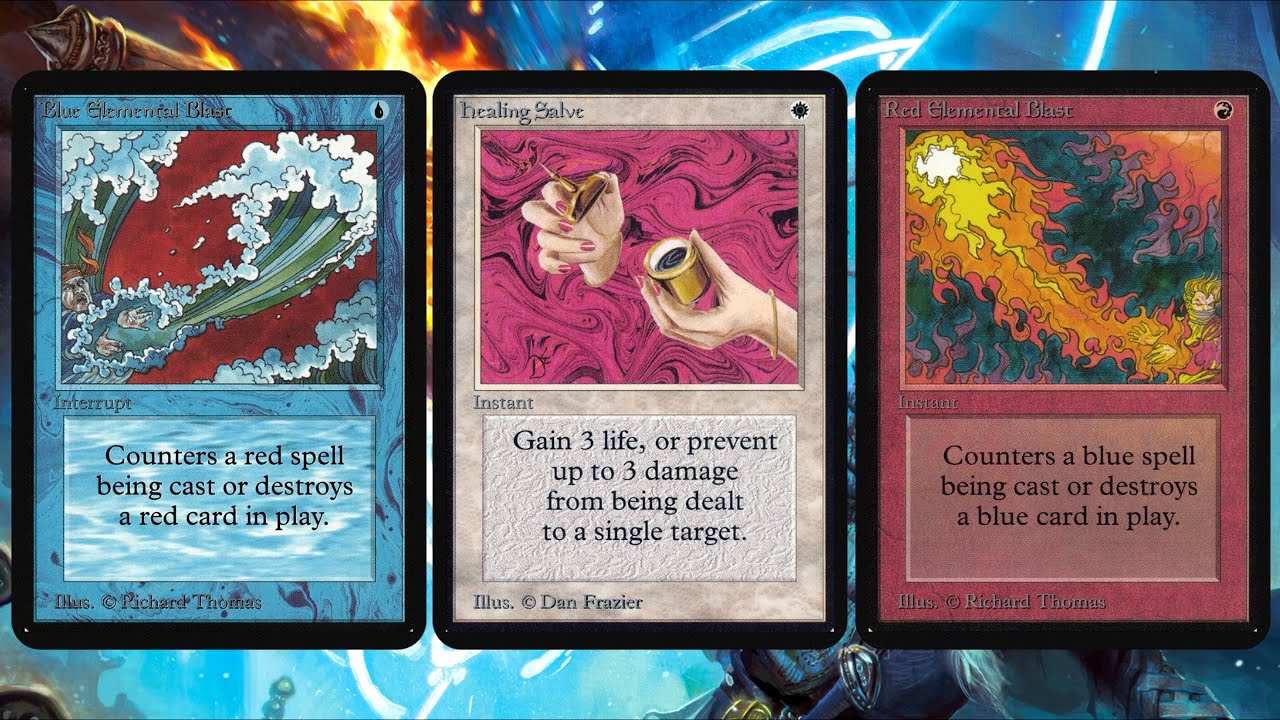
You know that feeling when you topdeck a “removal spell”… and it’s the wrong kind of removal for the problem in front of you? Modal spells are Magic’s way of saying, “Cool story. What if your card wasn’t dead here?”
TLDR
- A modal spell is a spell with two or more listed options (modes), usually introduced by “Choose one,” “Choose two,” or “Choose one or more.”
- You choose the mode(s) as you cast the spell, and you can’t change them later.
- If a chosen mode needs targets, you must be able to choose legal targets right then.
- Copies of modal spells keep the same mode(s), though you can often choose new targets.
- In Commander, modal spells are huge because they compress roles and reduce “wrong half of the deck” moments, but you often pay a small versatility tax in mana.
Quick related MTGEDH links:
- MTG EDH home
- MTG EDH Draft Simulator (modal spells show up constantly in Limited, and reps help you learn them fast)
What is a modal spell in MTG?
A spell is modal if it presents multiple options in a list and tells you to choose a certain number of them. Each option is a mode.
Classic examples you’ve probably seen in Commander:
- Return to Nature: pick one job (artifact, enchantment, or graveyard)
- Cryptic Command: pick two jobs (counter, bounce, tap, draw)
- Mystic Confluence: pick three jobs, and it even lets you repeat a mode if you want
- Fiery Confluence: same deal, and repeating modes is often the whole point
Also worth noting: “modal” isn’t just for spells. Abilities can be modal too (triggered or activated abilities that give you a menu).
How modes work when you cast a modal spell
Here’s the practical, table-ready version:
- You announce the mode(s) while casting the spell.
This happens during the casting process, not on resolution. - Then you choose targets required by the mode(s) you picked.
If you didn’t pick a mode that targets something, you don’t pick targets for it. - Once the spell is on the stack, the mode choice is locked in.
Opponents can respond, but nobody gets to “wait and see” which mode you meant.
That’s why good table etiquette for modal spells is simply:
“Casting X, choosing these mode(s), targeting Y.”
It keeps everyone sane and prevents the classic “I thought you picked the other one” argument.
Targets and timing: the gotchas that cause rules debates
You can’t choose an illegal mode
If a mode would be illegal (usually because you can’t choose required legal targets), you can’t pick it. If none of the modes are legal, you can’t cast the spell.
Example: If there’s no legal target for the “counter” mode on a charm, you can still cast the charm, but you’ll need to pick a different mode.
A modal spell only targets if the chosen mode targets
This one is sneakily important.
If the spell has a mode that targets, but you didn’t choose it, the spell is treated as though it does not have those targets at all.
Example: Cryptic Command can target, but if you choose “Tap all creatures your opponents control” and “Draw a card,” there are no targets for the spell.
You don’t get to respond between modes
When a modal spell resolves, it resolves as one spell. You follow the instructions in order, but nobody gets priority mid-resolution.
If you have ever asked, “Can I respond after the first mode?” the answer is “Nope.” (You’re not alone.)
If a target becomes illegal, only that part fails (usually)
When the spell resolves, it checks whether its targets are still legal.
- If all targets are illegal, the entire spell doesn’t resolve.
- If some targets are still legal, the spell resolves and does as much as it can. Parts that rely on illegal targets won’t affect them.
This matters a lot for modal spells that have multiple targeted modes, or a mix of targeted and untargeted modes.
“Choose two,” “choose one or more,” and repeating modes
A few key rules-of-thumb that match how the game actually treats these cards:
You normally can’t pick the same mode twice
If a spell says “Choose two” or “Choose three,” you choose different modes unless the card explicitly says you can repeat.
So on most “choose two” spells, you can’t go “counter it twice” like you’re paying for extra emphasis.
Some modal spells explicitly allow repeats
Cards like Mystic Confluence and Fiery Confluence say you may choose the same mode more than once. When you do, the spell treats that mode as though it appears multiple times in sequence.
That’s why Confluences scale so well in Commander. They let you tune the spell to the table:
- Need a mini-wipe? Stack the damage mode.
- Need artifact hate? Stack the destroy mode.
- Need to dig? Stack the draw mode.
Some modal spells have mode-specific costs
Sometimes each mode has an additional cost attached to it. If you choose multiple of those modes, you pay all the costs required.
This is the design space behind a bunch of newer “menu spells.”
Modal keyword mechanics you’ll see in Commander
Magic has several mechanics that are basically “modal, but with a built-in pricing model.”
Entwine
Entwine lets you choose all modes instead of just one (for an additional cost).
Example: Tooth and Nail is already strong, but entwine turns it from “tutor” or “cheat” into “tutor and cheat,” which is exactly as rude as it sounds.
Escalate
Escalate lets you choose additional modes beyond the first by paying an extra cost per extra mode.
Example: Collective Brutality is the poster child. It’s flexible early, and it scales when you’re willing to pitch cards.
Spree
Spree (from Outlaws of Thunder Junction) is basically “choose one or more,” where each mode is an additional cost you pay.
Example: Rush of Dread can be a small punch, a big punch, or a “close the game” punch depending on which costs you pay.
Commander translation: Spree spells often play like customizable “packages,” and they’re excellent when you want cards that stay relevant from turn 3 to turn 11.
Copies and mode changes: what gets copied, what doesn’t
If you copy a modal spell, the copy keeps the original mode choices. You don’t get to pick new modes for the copy.
You often can choose new targets for the copy if the copy effect allows it, but “new targets” is not the same thing as “new modes.”
Also, effects that change a spell’s targets (like redirection) do not change the spell’s modes. The menu choice is baked in.
Modal spells vs modal double-faced cards
Magic also uses “modal” in modal double-faced cards (MDFCs), and the similarity is real: both are about choosing between options.
But they’re not the same rules concept:
- A modal spell: one spell, multiple effects to choose from.
- A modal double-faced card: one card, you choose which face you’re casting/playing before it even hits the stack.
A modal double-faced card can still be a modal spell, but only if the face you cast has modes. Otherwise, it’s just an MDFC doing MDFC things.
Why Commander players love modal spells (and when you shouldn’t)
Modal spells are Commander glue because multiplayer games are messy.
Why they’re great
- Role compression: One card covers multiple needs (interaction, protection, value).
- Fewer dead draws: Your removal spell is more likely to matter in a random pod.
- Politics-friendly: The flexibility lets you pick the least inflammatory line, or the line that helps an ally stop the archenemy.
The tradeoff
You often pay a mana premium for flexibility. A modal spell might be “good enough” at three jobs, but not “best-in-class” at any one job.
In faster, higher-power pods, that premium can matter. In slower, grindier pods, flexibility is usually worth it.
Quick Commander deckbuilding rules of thumb for modal spells
- If your deck sometimes loses because you “had the wrong answer,” add a few modal spells that cover the gaps.
- Put modal spells mostly in your interaction and utility slots, not as your core engine.
- In high-power and cEDH-adjacent builds, prioritize modal spells that are still efficient when you only need one mode.
A simple filter that works:
Would you be happy casting this for just one mode?
If the answer is “only if I’m desperate,” it’s probably a trap in tighter metas.
Common mistakes
- Not announcing modes and targets clearly, then rewinding the table three actions later.
- Trying to choose the same mode twice on a spell that doesn’t allow it.
- Choosing a mode that has no legal target, then wondering why the cast is illegal.
- Thinking you can respond between modes during resolution.
- Forgetting that copies keep modes, so your copied charm does not magically become a different charm.
FAQs
Are all “choose one” spells modal?
If the spell presents multiple listed options as modes, yes. If it’s just “choose a color” or “choose a number,” that’s a choice, but not a modal menu.
When do I choose the modes?
When you cast the spell (or when the ability goes on the stack, if it’s a modal ability).
Can I change modes after someone responds?
No. Once it’s on the stack, the mode choice is locked.
If one mode’s target becomes illegal, does the whole spell fizzle?
Only if all targets become illegal. Otherwise, the spell resolves and does what it can.
Do modal spells always have targets?
No. Many modes don’t target, and if you don’t choose a targeting mode, the spell might not target at all.
Wrap Up
A modal spell in MTG is a spell with a menu: you choose one or more modes as you cast it, and that choice is locked in on the stack. If you remember one thing, make it this:
Choose modes first, then targets, and announce both clearly.
Your playgroup will thank you. Even the blue player. Maybe.