

The phrase “I win?” is only fun when everyone at the table knew it was possible.
Rule 0 combo disclosure isn’t about giving away your whole decklist. It’s about making sure nobody feels ambushed by a game that ends on a different planet than the one they signed up for.
TLDR
- Disclose combos by type, speed, and consistency, not by reciting 99 cards.
- The big “feel” divider is two-card win combos and how early they can happen.
- A good disclosure includes: Do you run combos? How fast? How many tutors? How interactable?
- If someone asks “what’s the combo,” you can answer without handing them a script, just name the pieces and move on.
- Use a copy/paste prompt so combo talks take 20 seconds, not 20 minutes.
Related MTGEDH reads:
- MTG Commander Rule 0: The Pregame Talk That Actually Works
- MTG Commander Power Level Checklist: 10 Questions That Predict the Game
First, the Ground Rule: Rule 0 Is Agreement, Not a Declaration
Rule Zero is not “I’m doing this, deal with it.” It’s “Would everyone like this kind of game?”
That matters a lot for combos, because combos change the shape of the game more than almost anything else.
The Combo Spectrum (Because “I Don’t Run Infinites” Is Often… Not True)
Combos in Commander aren’t binary. They’re a spectrum.
1) No-combo decks
Wins via combat, value, big finishers, maybe a synergy pile like “make 80 tokens.”
2) Engine loops (infinite-ish, board-dependent)
Examples:
- Token maker + sac outlet + payoff
- Recursion loops that need multiple permanents and usually fold to removal
These can be “infinite,” but they’re often fragile and require setup.
3) Two-card win combos (compact and fast)
Examples people will recognize immediately:
- Exquisite Blood + Sanguine Bond
- Heliod, Sun-Crowned + Walking Ballista
- High-power staples like Thassa’s Oracle lines in optimized metas (also treated as a major bracket divider)
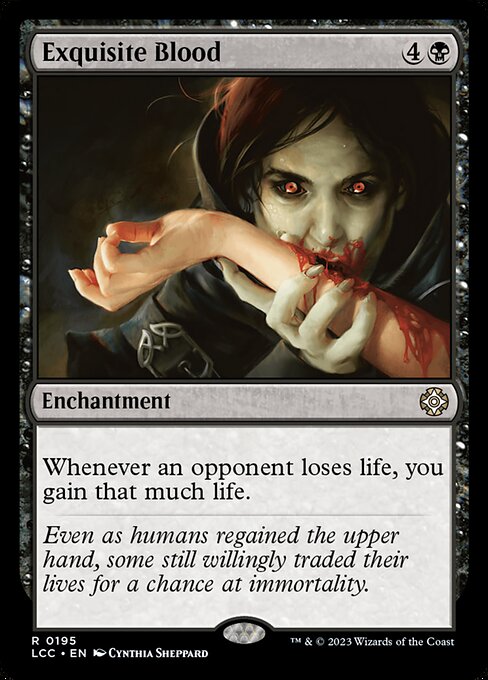


These are the combos that create the biggest expectation gap.
What You Should Disclose (Without Spoiling the Movie)
A good Rule 0 combo disclosure answers four questions:
1) Do you have combos that can end the game?
Simple yes/no.
2) How fast can the combo realistically happen?
Give a turn range assuming light interaction.
- “Usually not before turn 8.”
- “Can threaten turn 6 with a good hand.”
- “This is an optimized list, it can win early.”
Bracket language often uses “how many turns you expect to play before you can win or lose” as a matching tool, which is basically the same concept in friendlier clothing.
3) How compact is it?
- Two-card win
- Three-plus pieces
- Needs commander
- Needs board state
This is the “spoiler-free” heart of disclosure.
4) How consistent is it?
This is mostly tutor density and redundancy:
- “I have 5-6 tutors and multiple redundant pieces” is very different from “I have one combo and I draw into it sometimes.”
The bracket framework explicitly calls out top-tier tutors and compact win conditions as major power signals.
The Disclosure Ladder (Steal This)
Use this to describe your deck in one sentence:
- Level A: No combos, combat/value win deck.
- Level B: Has synergy loops, but not built to assemble an early two-card win.
- Level C: Runs a real combo finish (usually 2-3 pieces), not the only plan, limited tutors.
- Level D: Primary wincon is a compact combo, multiple tutors, can win quickly with protection.
You don’t need to say “Level C.” Just use the language.
Copy/Paste Rule 0 Combo Prompts
Here are two versions, depending on how direct you want to be.
Soft version (friendly, low pressure):
Any combos we should know about before we start?
If yes: are they 2-card wins, or more setup?
And roughly what turn can your deck threaten a win if things go well?
Direct version (for higher-power pods):
Combo check:
- Any 2-card win combos?
- How many tutors are you on?
- What’s the earliest realistic win turn?
- Are you expecting stack interaction at this table?
If you want more scripts like this, reference MTG Commander Pregame Scripts: Copy/Paste Rule 0 Prompts for Any Pod.
“But I Don’t Want to Spoil It”
Totally fair. Here’s the compromise that works:
- Start with the spoiler-free disclosure (speed, compactness, tutors).
- If someone asks for details, give the pieces quickly and move on.
Example:
- “Yes, there’s a two-card infinite. It’s in the deck as a finisher, not the whole plan. If you want the exact cards, it’s X and Y.”
In casual Commander, surprises are only fun when they’re the “oh wow cool” kind, not the “wait, that was the game?” kind.
If You’re the Non-Combo Player, Here’s What to Ask For
You don’t need to interrogate anyone. Ask the questions that protect your time:
- “Are we expecting two-card wins?”
- “Are tutors common?”
- “Are we playing enough interaction to stop a fast combo?”
- “If a combo happens, are we okay with it ending the game quickly, or do we want more battlecruiser vibes?”
This lines up with the broader Commander philosophy that players should communicate expectations and choose games they actually want to play.
FAQs
Do I have to reveal my exact combo pieces in Rule 0?
No. But you should disclose the existence, speed, and compactness. If asked directly, answering is the sportsmanlike move.
Are combos “against the spirit of Commander”?
Not inherently. The spirit problem happens when the pod expected one kind of game and got another. That’s a communication issue, not a mechanics issue.
What if my combo is slow and clunky?
Say that. “It’s a five-mana enchantment pair and I’m not tutoring hard” lands very differently than “I can win from hand.”
Wrap Up
Rule 0 combo disclosure is not a confession. It’s table matchmaking.
Tell people: what kind of combo, how fast, how consistent. Save the decklist reveal for after the game, when everyone is still friends.