
You ever sit down for “casual Commander” and realize on turn three that your deck just became the table’s main character… and nobody asked for that season?
Yeah. Let’s fix it, without turning your list into 100 cards of sad regrets.
TLDR
- Powering down is mostly about lowering your deck’s speed, consistency, and inevitability, not removing the “good cards that make it function.”
- Cut fast mana and cheap, unconditional tutors first. Those are the biggest “oops, this is cEDH now” levers.
- Keep the glue: lands, ramp, draw, and a normal amount of interaction. Cutting those just makes your deck clunky, not fair.
- If your wins feel “out of nowhere,” swap to more telegraphed win conditions or add an extra step to your combo.
- The easiest long-term solution is a 10-card power module you can swap based on the pod.
What “tuning down” actually means in Commander MTG
To lower the power level of a Commander deck, you’re aiming to reduce one (or more) of these:
- Speed: how early you can deploy threats and present a win
- Consistency: how often you find the same best cards every game
- Inevitability: how hard it is for the table to stop you once you’re online
- Resilience: how well you protect your plan (especially with “free” spells)
This is not the same thing as “make my deck worse.” The goal is a fairer game, not a worse deckbuilding experience.
A tuned-down deck should still:
- hit its land drops,
- cast spells on curve,
- draw enough cards to keep playing,
- and have a real way to win that doesn’t require everyone else to fall asleep first.
Step 1: Identify which “power dial” you’re accidentally cranking
Before you cut anything, ask: why are people getting run over? Most “too strong” decks have one main culprit.
If you’re winning too fast
This is almost always fast mana + compact win lines. You’re not “playing better,” you’re playing with a head start.
If you’re winning too consistently
This is usually tutors, redundancy, and low-cost card selection. You’re functionally running extra copies of your best cards in a singleton format.
If you’re winning through interaction like a brick wall
That’s free protection, free counters, and lock-style play patterns. The table feels like they never got a window.
If you’re not winning fast, but the table still can’t catch up
That’s inevitability: recursive engines, resource denial, and value loops that bury everyone even if you’re “not comboing.”
The golden rule: Cut the unfair, keep the glue
When people try to power down a deck, they often make the same mistake: they cut ramp and draw, then wonder why the deck feels awful.
Don’t do that.
Keep:
- your normal ramp package (just make it fairer)
- your normal draw package
- enough interaction to not fold to someone else’s nonsense
Cut:
- the “skip the early turns” cards
- the “I always have it” cards
- the “you can’t respond” cards
You want your deck to feel like Commander, not like a precon that got lost in the dryer.
The fastest tune-down wins (these swaps do the most work)
1) Remove fast mana (or at least the worst offenders)
If you want one clean lever that changes everything, it’s this: stop producing 4–6 mana on turn two.
Common fast mana culprits include 0–1 mana rocks and “burst” acceleration that’s effectively mana-positive.
If your pod is truly casual, even just cutting the top-end fast mana often fixes the whole vibe.


 : Add
: Add  .
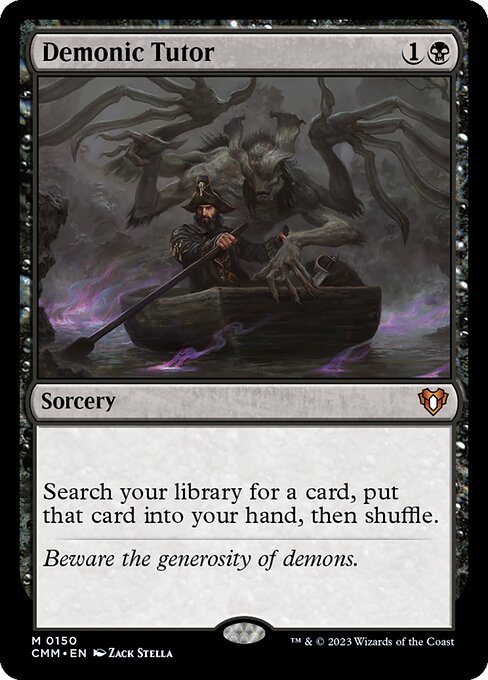
.2) Replace cheap, unconditional tutors with “theme tutors” or draw
Tutors are not morally evil. They just turn Commander into a repeatable script.
If you’re trying to power down without killing your deck:
- cut the best tutors first
- keep (or add) slower, narrower, theme-based search
- or replace tutors with more draw so the deck still functions, just less predictably
The point is to stop being the person who always has the same best two-card line on schedule.

3) Add friction to your win condition
A lot of “too strong for casual” isn’t the commander. It’s the win package being too compact.
Easy ways to add friction:
- shift from a two-card “I win” to a three-card line
- swap a deterministic win for a win that needs a turn cycle
- replace a “from hand” win with one that needs board presence
You’re not banning yourself from winning. You’re giving the table a chance to see it coming and interact.
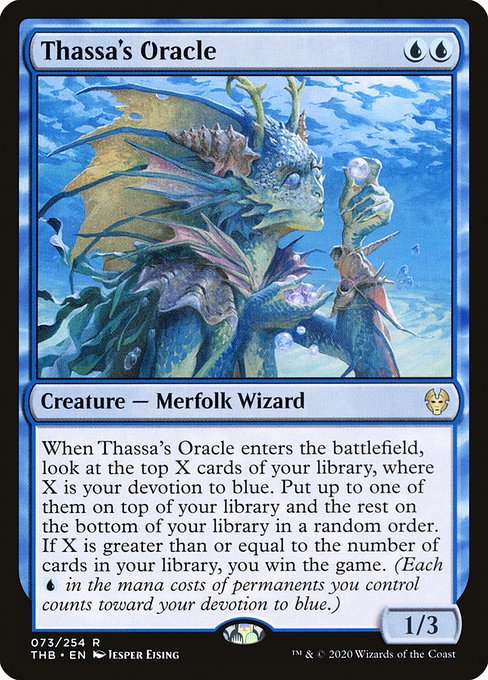
 in the mana costs of permanents you control counts toward your devotion to blue.)
Keep combos, but make them fair to sit across from
Combos are fine at a lot of tables. The problem is when they’re:
- too fast (early)
- too consistent (tutored every game)
- too protected (free shields)
- too opaque (“wait, you win… how?”)
If you want to keep combos and still fit mid-power pods, aim for combos that are at least one of these:
- mana intensive
- needs board setup
- needs a full turn
- easy to disrupt with common interaction
Also, if your combo requires a five-minute explanation, you can still play it, but please practice the explanation like you’re speed-running a cutscene.
Replace “free” protection with “paying mana like a responsible adult”
Free interaction is one of the biggest separators between cEDH and casual, because it deletes the normal risk of tapping out.
If you’re constantly doing “tap out, still safe,” your deck will feel oppressive even if it isn’t technically winning early.
Powering down here looks like:
- fewer free counters and free protection spells
- more interaction that asks you to hold up mana
- more “soft protection” like sequencing, redundancy, and board-based defenses
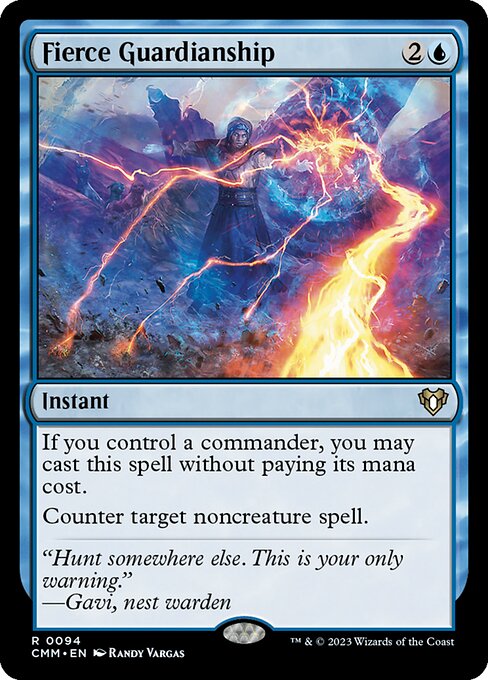
Counter target noncreature spell.
—Gavi, nest warden
Keep your deck’s identity: Swap power for personality
Here’s the secret sauce: you don’t need to replace strong cards with bad cards. Replace them with on-theme cards that do similar jobs, just less efficiently.
Examples of “same job, less oppression” swaps:
- fast mana → normal 2-mana rocks, land ramp, or slower accelerants
- unconditional tutors → tribal/theme tutors, “find a type” tutors, or draw engines
- instant-win combos → board-based finishers or combat closers that are interactable
- free protection → protection you actually pay for, or resilient board pieces
You end up with a deck that still feels like your deck, just less likely to create an accidental hostage situation.
The 10-card “power module” trick (best solution if you play multiple pods)
If you bounce between different power levels, build your deck with a small swap package:
- High-power module (10 cards): fast mana, best tutors, compact win line, free protection
- Mid-power module (10 cards): slower ramp, theme tutors or draw, interactable win plan, paid protection
Swap them before the game. Tell the table you’re doing it. Everyone wins, including you.
This also makes Rule 0 conversations way easier, because you can literally say:
“I’ve got the mid-power version in right now.”
How to know you tuned it down enough
You don’t need a numbered power level. You need two reality checks:
- When can you realistically attempt to win if nobody stops you?
If your answer is “turn 4–5 consistently,” you are not in casual land. - How often do you play the same “best game” every game?
If your lines feel scripted, you still have too much consistency.
A tuned-down deck should have variance, pivots, and games where you win differently, or lose without it feeling like you never had a chance to play.
Common mistakes when depowering a Commander deck
- Cutting ramp and draw first. That doesn’t lower power, it lowers functionality.
- Keeping the compact win while cutting interaction. Now you either do nothing or randomly spike a win.
- Replacing staples with expensive jank. Higher mana value does not automatically mean “fair.”
- Ignoring the commander. Some commanders are inherently high-octane. If the engine is in the command zone, you may need bigger concessions elsewhere.
- Not telling the pod. If you’re actively tuning for the table, say so. It builds trust fast.