
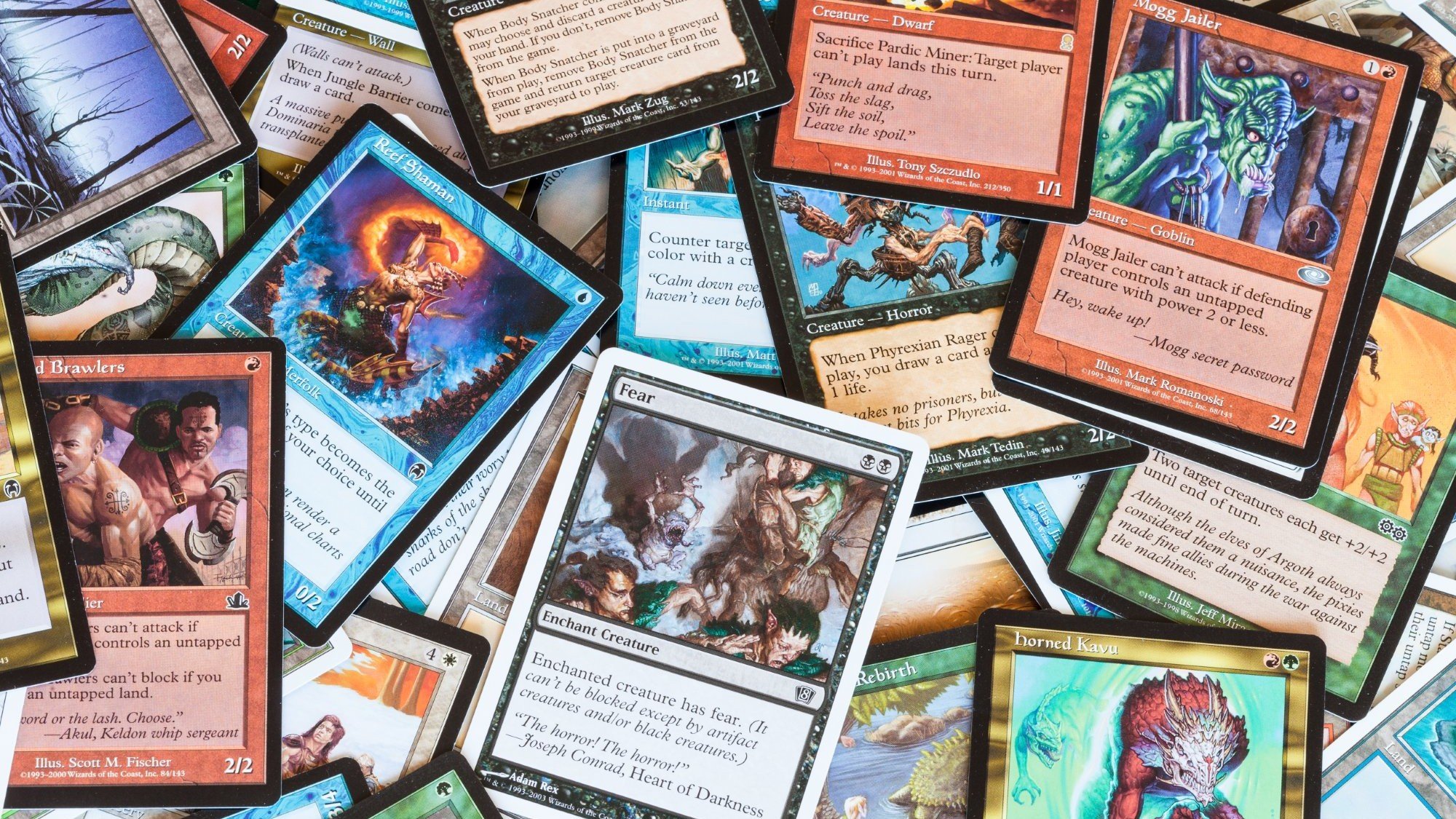
This is a repeatable “decklist to draft night” blueprint for turning a 540-card MTG Cube into a real, sleeveable, shuffleable thing instead of a forever-project living in your browser tabs.
TLDR
- A 540-card Cube is 36 packs of 15. Build your process around that reality.
- Don’t start printing until you’ve decided: list, collation, basics plan, DFC plan, storage plan.
- The secret to not losing your weekend is boring: batch your work and stop tinkering once you hit “final.”
- Maintenance matters: write 5 rules now, or you’ll “update the Cube” every set until you die.
Why 540 is the sweet spot
A 540-card Cube is popular because it cleanly supports 12 players drafting 3 packs of 15 (12 × 45 = 540). It’s big enough to feel like “variety,” but not so big that you need a forklift and a spreadsheet to remember what’s in it.
Also: if you’ve ever tried to cut a 720 down to “just the best stuff,” welcome. You’re among friends.
The 4-part setup blueprint (do this in order, or you’ll re-do everything later)
- Pick a list (and define what “done” means)
- Choose collation (full random vs. structured packs)
- Build your label/storage plan (dividers + where everything lives)
- Print + sort like a factory (batching beats vibes)
You can do all the fun Cube philosophy you want. But if you don’t answer these four, your Cube will stay “almost done” indefinitely.
Step 1: Pick a list (and stop tinkering)
Choose your Cube “type” in one sentence
You don’t need a manifesto. You need a sentence you can point at when you get tempted by the 37th cool six-drop.
Pick one:
- Vintage power-max: broken stuff, big swings, busted mana
- Legacy/unpowered: high power, fewer “oops I win” openers
- Modern-ish: cleaner gameplay, less free mana, more combat
- Synergy/archetype Cube: draft decks, not just goodstuff piles
- Peasant/budget: commons/uncommons and tight archetype scaffolding
Write your sentence somewhere you can’t ignore it.
Decide what’s “in the 540” vs “outside the 540”
This is where most first-time Cube printers accidentally create a 612-card mess.
In the 540:
- The draftable card pool (the thing you shuffle into packs)
Outside the 540 (recommended):
- Basic land station (separate stack/box of basics)
- Tokens/emblems (separate token pack)
- Reference cards (optional)
- DFC helpers (optional)
That separation is how you keep your Cube draftable without becoming a part-time warehouse manager.
Decide your DFC/MDFC approach now
Double-faced cards are awesome until you try to manage them at scale.
Pick one approach:
- Sleeve solution: opaque sleeves + checklist/helper cards (common, simple)
- Print both faces: works if your print workflow supports it cleanly and you’re consistent
- Front-face only: easiest, but you’ll need a table rule for what the back is
There’s no “correct” choice. There is only “choose once so you don’t re-sleeve 540 cards later.”
Once your list is final (the moment of no return)
Here’s the part where you stop “tuning” and start “having a Cube.”
Lock the list, then print magic proxies so your cube is draft-ready instead of eternally “almost done.”
If you don’t lock the list, every set release becomes a personal attack.
Step 2: Decide pack collation (how you build packs)
Collation is just “how you make packs.” And yes, Cube people will argue about it forever. That’s part of the charm. Like arguing about which basic land art is morally correct.
Option A: Full random (fastest, most common)
How it works: Shuffle the whole 540, deal out 36 packs of 15.
Pros
- Fast to set up
- Maximum replayability
- No “pack recipes” to maintain
Cons
- You can get color clumps
- Some drafts feel swingier depending on the shuffle
Best for: Most Cubes, most groups, especially if you want low maintenance.
Option B: “Loosely structured” packs (best balance of fairness + sanity)
How it works: You create a light recipe so packs aren’t all one color. A common approach is something like:
- 1 white, 1 blue, 1 black, 1 red, 1 green
- 1 multicolor
- 1 colorless/artifact
- 1 land
- 7 wildcards (anything)
Pros
- Better color balance without feeling scripted
- Still pretty fast once your sections are organized
Cons
- You’re doing some pre-sorting
- You have to maintain sections as the Cube changes
Best for: Groups that hate color screw and want drafts to “feel normal.”
Option C: “Rarity-style” packs (highest ceremony, highest effort)
How it works: You sort into rarity-ish buckets (or power tiers) and build packs like:
- 1 “rare/mythic slot”
- 3 “uncommon slots”
- 11 “common slots”
Pros
- Feels like opening boosters
- Helps control power band and signaling
Cons
- More sorting, more maintenance, more time
- Your Cube becomes a mini TCG manufacturing line
Best for: Set-Cube vibes, peasant/budget Cubes, or groups that love the “booster feel.”
Quick collation picker
- You want the easiest repeatable draft: Option A
- You want balance but not a spreadsheet hobby: Option B
- You want boosters-without-boosters: Option C
Step 3: Label + storage plan (future-you is begging you)
This step feels optional until you finish your first draft and realize you now own 540 loose cards that need to become “packs again” next week.
Choose your organization scheme (pick one)
Scheme 1: By section (recommended for maintenance)
- White / Blue / Black / Red / Green
- Multicolor (often by guild)
- Colorless (artifacts + misc)
- Lands
Why it’s good: Easy to maintain counts and do swaps.
Scheme 2: By type (creatures/spells/etc)
- Creatures / Noncreatures / Lands / etc.
Why it’s risky: Makes archetype balancing harder and maintenance weirder.
Scheme 3: “Whatever pile I’m holding”
- This is not a scheme. This is how Cubes die.
Use dividers like you mean it
You don’t need fancy. You need obvious:
- Color dividers (W/U/B/R/G)
- A lands divider
- A “multicolor” divider
- A “tokens” divider
- A “DFC solution” divider (if applicable)
Tiny pro tip: Put a small index card behind each divider with a target count (“White: 80”) so you can sanity-check quickly after drafts.
Build a simple “draft kit”
If you host, your goal is “players show up empty-handed and still draft.”
Throw these in a small box:
- A stack of sleeves (extras for replacements)
- Dice/spindowns
- A few pens
- Tokens/emblems pack
- A printed Cube list or QR code to it
- Basic land station (separate)
The kit is the difference between “smooth night” and “everyone waits while you rummage.”
Step 4: Print prep + assembly-line sorting (this is where weekends go to die… unless you batch)
Print-prep checklist (Cube edition)
Before you print anything, verify:
- Your list is exactly 540 (not 541, not “540 plus basics”)
- Duplicates are intentional (if you run them)
- Basics are separate (recommended)
- Tokens are separate
- DFC plan is decided (don’t punt this)
- Any weird card names are correct (split cards, punctuation, etc.)
- Your sections add up (if you’re doing structured collation)
If you’re using a decklist importer, keep the list format boring: quantity + card name, one per line. Remove headers like “Creatures (20)” and any maybeboard sections.
Sorting workflow that won’t melt your brain
The biggest mistake people make is trying to sort perfectly immediately.
Do it in passes:
Pass 1: Big buckets
- White / Blue / Black / Red / Green
- Multicolor
- Colorless
- Lands
- Tokens/Extras
Pass 2: Sub-buckets (only if you need them)
- Multicolor by guild
- Lands (fixing vs utility)
- Artifacts (mana vs non-mana)
Pass 3: Collation-ready
- If you’re full random: stop here. You’re done.
- If you’re structured: you now have piles you can pull from quickly.
This is assembly line logic: big wins first, precision later.
Sleeving without losing your soul
Sleeving 540 cards is… a lot. Don’t make it harder.
- Sleeve in color piles so you always know what you’re holding
- Keep a tiny “reject stack” for anything weird (misprints, missing, wrong card)
- Put on something to watch/listen to and treat it like a production run
- Keep a handful of spare sleeves in the draft kit for future repairs
If you run DFC helpers, sleeve those the same way and store them in the same “DFC divider” section every time. Consistency beats cleverness.
Mini SOP: Maintenance rules that prevent Cube entropy
Here are five rules that keep your Cube from turning into a chaotic blob.
Rule 1: One master list, one source of truth
Your Cube exists in one canonical list (CubeCobra, spreadsheet, whatever). Everything else is a copy.
Rule 2: Version your updates
When you change cards, record:
- Date
- Cards in / cards out
- Why (archetype support, power band, fun, etc.)
This prevents the classic Cube loop of “didn’t we cut this already?”
Rule 3: Changes happen in batches, not drips
Don’t swap one card every time you see a spoiler. Collect candidates, then update in one session.
Rule 4: Post-draft reset is a checklist
After every draft:
- Count packs (or at least confirm the Cube is whole)
- Return cards to their sections
- Replace damaged sleeves
- Restock basics/tokens as needed
Rule 5: Testing cards live in a “test pocket”
If you like trying new cards, great. Give them a home:
- A small “test” mini-pack or divider
- A rule like “swap up to 10 cards between drafts”
- After 3 drafts, promote or cut
That keeps your main Cube stable while still letting you experiment.
FAQs
How many packs do you make from a 540 Cube?
36 packs of 15.
How many players can a 540 Cube support?
Up to 12 for a full 3-pack draft. With fewer players, you’ll see less of the Cube per draft (which is fine).
Should I include basic lands in the 540?
Usually no. A separate basic land station is cleaner and makes your Cube easier to maintain.
Do I need duplicates in a 540 Cube?
Not required. Some Cubes run duplicates to support specific archetypes or smooth fixing, but most 540 “classic” Cubes are singleton.
What’s the easiest collation method?
Full random: shuffle everything and deal packs. If your group complains about color clumps, graduate to lightly structured packs.
How do you handle double-faced cards?
Pick a consistent approach (helper cards, print both faces, or front-face only) and stick to it. The mistake is changing approaches after everything is sleeved.
References
- General printing concept: bleed and why it matters in cutting workflows: https://en.wikipedia.org/wiki/Bleed_(printing)
- Cube basics and common list hosting/sectioning practices (Cube community resource): https://cubecobra.com/
- Common Cube drafting structure (3 packs of 15 as the default draft pattern): https://mtg.fandom.com/wiki/Draft