
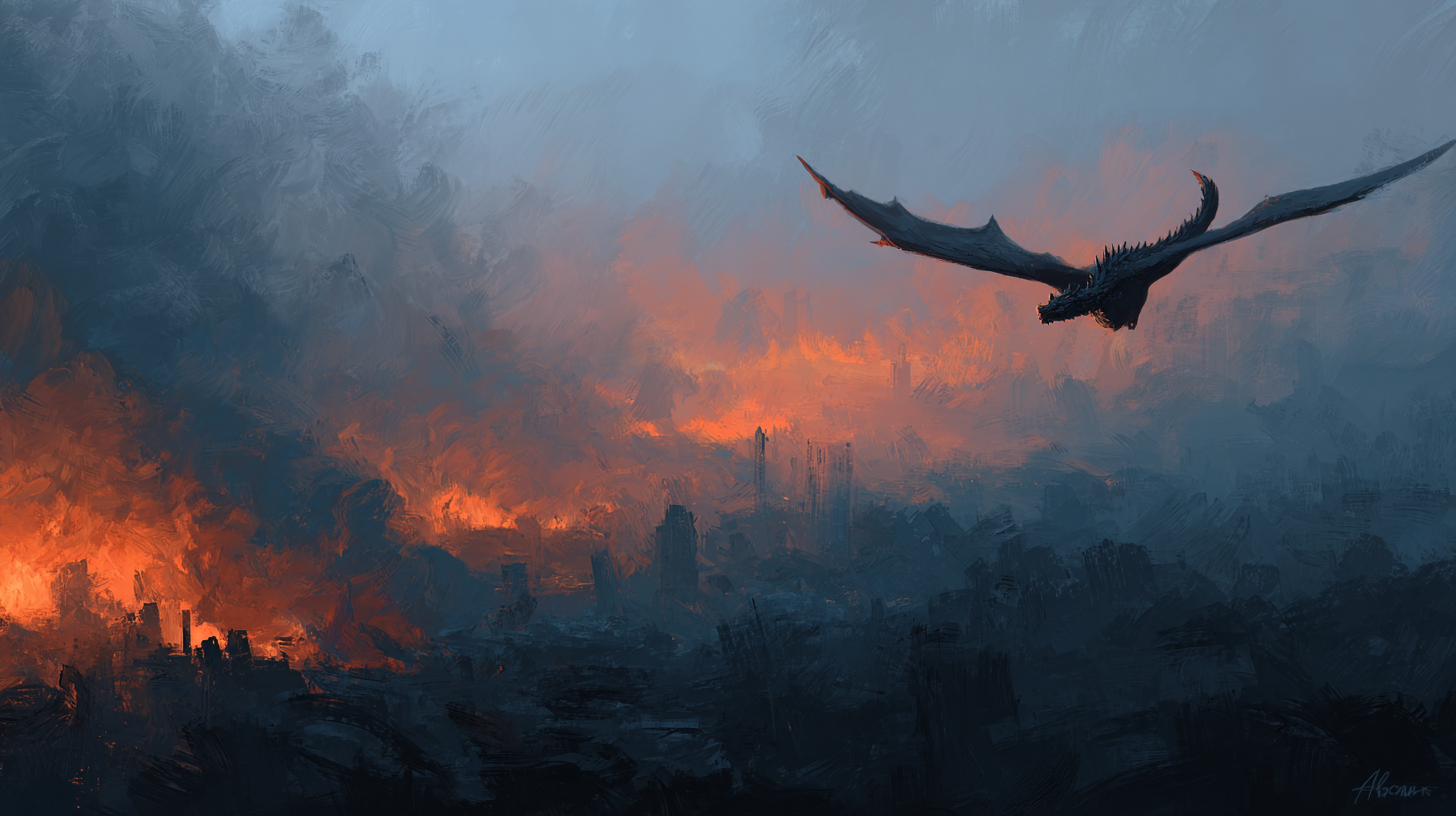
EDH started as a very specific fever dream: pick one of five ancient Elder Dragons, play a singleton pile, and try to bonk someone three times. So let’s do the thing literally, on purpose, in 2026.
TLDR
- A “literal” Elder Dragon Highlander deck (for our purposes) runs the original five Elder Dragons plus their modern “facelift” versions, and we actually try to win games with them.
- Scion of the Ur-Dragon is the cleanest commander because it tutors your Dragons, cheats their mana costs, and sidesteps the old upkeep tax without needing your deck to be “Dragon tribal goodstuff.”
- Your deck is basically three parts: fixing + ramp, graveyard recursion, and interaction so your Dragon parade survives long enough to matter.
- Play it like a toolbox: turn Scion into the exact Elder Dragon you need, then use reanimation to make those Dragons stick around.
- Tell your pod what’s up: “This is a bucket-list Elder Dragon deck,” not “Oops all one-shots and combo lines.”
Related MTGEDH stuff while you’re here: check out the MTGEDH Draft Simulator (great for sharpening fundamentals), and the main MTGEDH hub if you want more tools and Commander resources.
What is a “literal Elder Dragon Highlander” deck?
EDH, short for Elder Dragon Highlander, is the fan-made format that became Commander. The name comes from the original five Elder Dragons from Legends:
- Arcades Sabboth
- Chromium
- Nicol Bolas
- Palladia-Mors
- Vaevictis Asmadi
They’re all 7/7 monsters with an “upkeep payment or sacrifice” clause, which is a big reason Commander damage is 21 (three clean hits at seven power). The format grew way beyond that, but the origin story is still baked into the vibes.
For this achievement, we’re going to build around:
- The original five Elder Dragons
- The Core Set 2019 revisit cycle (plus Vaevictis’s modern version)
- Piru, the Volatile, a modern callback that feels like it crawled straight out of a 1994 rulebook and immediately set the table on fire
That’s the “literal” part: you are not just playing Dragons, you are playing the Dragons that made the acronym happen.
Why Scion of the Ur-Dragon is the perfect “literal EDH” commander
You can absolutely lead this deck with something like The Ur-Dragon, Tiamat, or Morophon, the Boundless. They’re all powerful. They’re also all slightly missing the point.
Here’s what you actually need for a literal Elder Dragon Highlander build:
- A way to find specific Dragons (not just draw them and hope)
- A way to avoid paying 7–8 mana over and over
- A way to ignore the old-school upkeep tax without building your whole deck around it
- A plan that still feels like you’re playing Elder Dragons, not “five-color goodstuff featuring a Dragon mascot”
Scion of the Ur-Dragon checks every box.
- It searches your library for a Dragon and puts it into your graveyard.
- It becomes a copy of that Dragon until end of turn.
- It’s still your commander while it’s cosplaying, which matters a lot for commander damage.
In practice: Scion is both tutor and cheat code. It’s the glue that lets you play a deck full of expensive, awkward, color-intensive Dragons without turning your early turns into “land, pass, land, pass, please don’t kill me.”
The Elder Dragon toolbox: what to search for and when
Think of your Elder Dragons as a Swiss Army knife where every tool costs seven mana, so we simply refuse to pay retail.
Need protection or a discard outlet?
Chromium, the Mutable is your emergency button. If you suspect removal, turning Scion into Chromium gives you access to a discard-for-hexproof line that can save your commander and also pitch extra Dragons into the graveyard for later.
It’s also quietly important because this deck will sometimes draw the wrong half: too many expensive Dragons, not enough action. Chromium helps convert “oops all eight-drops” into “cool, now my Living Death is lethal.”
Need to ruin someone’s hand and their whole afternoon?
Nicol Bolas (the original) is still rude in the most vintage way possible. If Scion connects while copying Bolas, the discard trigger happens. You’re not “comboing,” you’re just honoring tradition by making someone regret letting a 7/7 flyer hit them.
If you actually hard-cast a Bolas in this deck, the best candidate is usually Nicol Bolas, the Ravager because it’s a reasonable mana value, generates value immediately, and can flip into a planeswalker that takes over games.
Need to control the board without pretending this is a control deck?
Two all-stars here:
- Vaevictis Asmadi, the Dire is repeatable chaos and removal stapled together. Scion into Vaevictis can delete problem permanents and sometimes high-roll you into something enormous.
- Piru, the Volatile is the “break glass in case of creature decks” option. If you can make Piru die on your terms, it can function as a wipe that also smashes life totals.
Need to actually close a game?
The funny thing about commander damage math is it does not care about your opponent’s life total, their pillowfort, or how much lifegain they did “as a bit.”
The original Elder Dragons hit for seven, which means:
- Three hits is lethal via commander damage
- You can speed that up with any pump effect (Vaevictis’s firebreathing-style activations are a classic)
The deck doesn’t need fancy win conditions. It needs windows where a Dragon can connect.
The support package that makes this deck function
A literal Elder Dragon deck lives or dies on the boring stuff. This is the part where we put on our responsible adult pants and add enough ramp, fixing, and recursion that our Dragons actually show up on time.
Mana and fixing: your first real goal
You’re five colors. Your commander is five colors. Your threats are rainbow-bricked with pips. You do not get to be cute here.
The baseline that usually feels good:
- 10–14 ramp pieces, leaning heavily toward color fixing
- A mana base that prioritizes untapped access to your colors (especially early)
What I like in this kind of build:
- Two-mana land ramp (the classics)
- A couple of “explosive” ramp creatures that tap for multiple colors
- One or two on-theme rocks like Dragon’s Hoard that do more than just make mana
Graveyard plan: Scion fuels it, you profit
Scion naturally loads your graveyard, which means you want payoffs that turn “tutored Dragon in graveyard” into “Dragon on board.”
Good categories:
- Efficient single-target reanimation (cheap, direct, rude)
- Repeatable reanimation (because you’re going to get wiped)
- Mass reanimation as a finisher (because sometimes you just want the table to gasp)
There’s also a sneaky “maintenance” angle: if you want to keep using Scion as a toolbox, you occasionally need to shuffle Dragons back so you don’t run out of targets.
Interaction and protection: yes, even in Dragon world
Your deck is slow-ish by nature. That means you need to survive the part of the game where other people are doing the dangerous things.
You don’t need to be a full control deck, but you do want:
- A handful of premium removal spells (because you’re five colors, so why not)
- Some stack interaction (you will lose to a combo eventually if you never say “no”)
- A couple protection pieces for Scion so you can keep the engine online
Optional spice that keeps it feeling like a “bucket list” deck
A literal Elder Dragon deck should be functional, but it should also feel like a story.
Cards that help the “dragon parade” moment:
- Haste enablers (so your big plays matter immediately)
- Cheats like Sneak effects (so your Dragons show up before turn 12)
- A small “subtheme” that makes one Elder Dragon shine (Arcades + defenders is a popular, hilarious mini-engine)
How to pilot the deck without tripping over your own Dragon wings
Early game: be boring on purpose
Your goal is not to look scary. Your goal is to:
- Fix colors
- Ramp
- Hold up a little interaction so you don’t get dunked on by the first scary thing
If your opening hand cannot cast ramp, it should at least cast fixing. Five-color hands that “eventually” work are how you end up watching other people play Magic.
Midgame: Scion turns your deck into a menu
This is where you start using Scion as a toolbox.
General play patterns:
- Activate Scion when you have a plan for the graveyard (reanimate soon, or shuffle back later)
- Turn Scion into the Dragon that solves the current problem (wipe, removal, pressure, value)
- Try to avoid copying a legend you already control (legend rule is not sentimental)
Closing: pick a lane, then commit
This deck closes games in two common ways:
- Commander damage via Scion copying a 7/7 Elder Dragon
- Mass reanimation that drops multiple Elder Dragons at once
The mistake people make is trying to do both at the same time. If your opening appears, take it. Elder Dragons are not known for their patience.
A Rule 0 script that saves everyone time
Here’s a copy-paste version that works at most tables:
“This is a Scion of the Ur-Dragon deck, but it’s built as a literal Elder Dragon Highlander theme deck. I’m running the original Elder Dragons and their modern versions. It has some interaction and reanimation, but it’s not a fast combo list. Are we cool with that power level?”
If your list includes the spicier free spells, you can add:
“I do have a couple high-end staples for protection and interaction, but I’m not trying to race to a turn-three win.”
Sample decklist: Elder Dragons Highlander (Scion toolbox)
This is a cleaned-up version of the list you provided (typos fixed, and yes, it’s still gloriously extra).
Commander (1)
- Scion of the Ur-Dragon
Creatures (23)
- Orator of Ojutai
- Wall of Roots
- Sylvan Caryatid
- Crashing Drawbridge
- Wall of Blossoms
- Wall of Omens
- Gwenna, Eyes of Gaea
- Minion of the Mighty
- Faeburrow Elder
- Bloom Tender
- Birds of Paradise
- Rivaz of the Claw
- Nicol Bolas
- Arcades Sabboth
- Arcades, the Strategist
- Chromium
- Chromium, the Mutable
- Nicol Bolas, the Ravager
- Palladia-Mors
- Palladia-Mors, the Ruiner
- Piru, the Volatile
- Vaevictis Asmadi
- Vaevictis Asmadi, the Dire
Instants (17)
- Swords to Plowshares
- Path to Exile
- Cyclonic Rift
- Assassin’s Trophy
- Brainstorm
- Anguished Unmaking
- Heroic Intervention
- Beast Within
- Fierce Guardianship
- Swan Song
- Teferi’s Protection
- An Offer You Can’t Refuse
- Deflecting Swat
- Chaos Warp
- Boros Charm
- Nature’s Claim
- Harrow
- Arcane Denial
Sorceries (13)
- Patriarch’s Bidding
- Cultivate
- Reanimate
- Living Death
- Unburial Rites
- Rampant Growth
- Farseek
- Kodama’s Reach
- Nature’s Lore
- Three Visits
- Exhume
- Blasphemous Act
- Toxic Deluge
Enchantments (4)
- Rhythm of the Wild
- Rhystic Study
- Mystic Remora
- Sneak Attack
Artifacts (5)
- Dragon’s Hoard
- Arcane Signet
- Sol Ring
- Fist of Suns
- Lightning Greaves
Lands (37)
- Command Tower
- Exotic Orchard
- Haven of the Spirit Dragon
- Path of Ancestry
- Stomping Ground
- Overgrown Tomb
- Blood Crypt
- Breeding Pool
- Watery Grave
- Steam Vents
- Temple Garden
- Sacred Foundry
- Godless Shrine
- Hallowed Fountain
- Verdant Catacombs
- Wooded Foothills
- Marsh Flats
- Arid Mesa
- Bloodstained Mire
- Windswept Heath
- Scalding Tarn
- Misty Rainforest
- Polluted Delta
- Flooded Strand
- Mana Confluence
- Reflecting Pool
- The World Tree
- Field of the Dead
- Raffine’s Tower
- Spara’s Headquarters
- Xander’s Lounge
- Jetmir’s Garden
- Ziatora’s Proving Grounds
- Island
- Mountain
- Forest
- Swamp
FAQs
Does Scion’s damage count as commander damage even when it’s a copy of another Dragon?
Yes. Commander damage is tied to the commander card itself, not what it looks like at the moment.
Do I ever have to pay the original Elder Dragons’ upkeep costs?
Not when Scion is copying them, because the copy effect lasts until end of turn. You’re basically borrowing their text box for the turn, then returning it before upkeep matters.
What if Scion copies a legendary Elder Dragon I already control?
You will run into the legend rule. Usually that means you lose the one you care about least, which is often not the plan. Try not to do this accidentally.
Is this deck actually good?
It can absolutely win games, especially if your table gives you time. But the point isn’t “optimized,” the point is “I played Elder Dragon Highlander like it was printed on the tin.”
Can I make it stronger without losing the theme?
Yes. The easiest upgrades are smoother mana, more efficient recursion, and a little more interaction. You don’t need to turn it into a combo machine to make it feel consistent.
Wrap Up
If you remember one thing, make it this: Scion turns a pile of expensive, awkward Elder Dragons into a real, flexible game plan. You get to play the format’s origin story, you get to do wildly unfair Nicol Bolas things, and you get to win in a way that feels like Commander was always supposed to feel, big, loud, and a little bit ridiculous.
Now go bonk someone three times for exactly 21 and pretend it’s 1996.