

Fast mana is the #1 reason a “friendly casual pod” turns into three people watching one player do math with five mana on turn 2.
You can fix a lot of that with one sentence before the game starts.
TLDR
- Define “fast mana” as mana acceleration that jumps you ahead of the table in the first 1-3 turns.
- Decide your pod’s policy up front: all legal, Sol Ring only, no mana-positive rocks, or a cap.
- Be aware of what’s banned (and why), because the ban list has moved recently in Commander terms.
- If you don’t set a policy, you’re still setting one, it’s just “surprise me.”
- Use a short disclosure script so nobody has to guess.
Internal links (related MTGEDH reads):
- MTG Commander Rule 0: The Pregame Talk That Actually Works
- MTG Commander Pregame Scripts: Copy/Paste Rule 0 Prompts for Any Pod
What Counts as Fast Mana in Commander?
Fast mana is acceleration that creates an above-curve mana advantage early, usually by being mana-positive (it makes more mana than it costs) or by producing extra mana immediately.
Common categories:
1) Mana-positive rocks (the classic “fast mana”)
- Mana Vault, Grim Monolith
- Mox Diamond, Chrome Mox
- Lion’s Eye Diamond
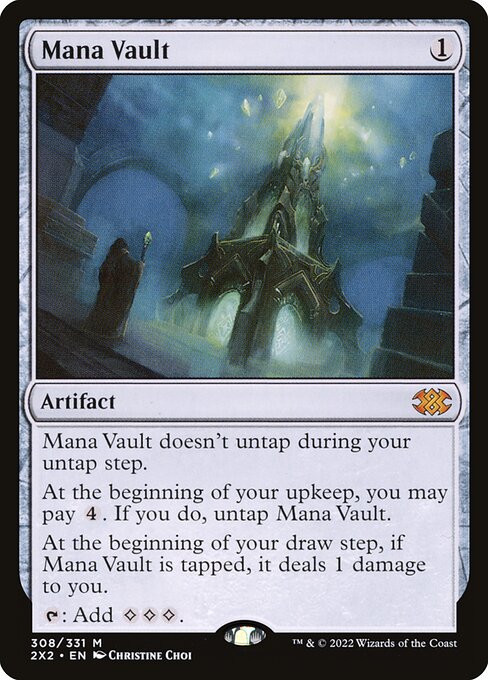

At the beginning of your upkeep, you may pay  . If you do, untap this artifact.
At the beginning of your draw step, if this artifact is tapped, it deals 1 damage to you.
 : Add
: Add  .
.
These are explicitly called out as “fast mana” style power outliers in the bracket discussion ecosystem.
2) Fast mana lands
- Ancient Tomb (two mana on turn 1 is the whole story)
- Big explosive lands like Gaea’s Cradle in the right deck
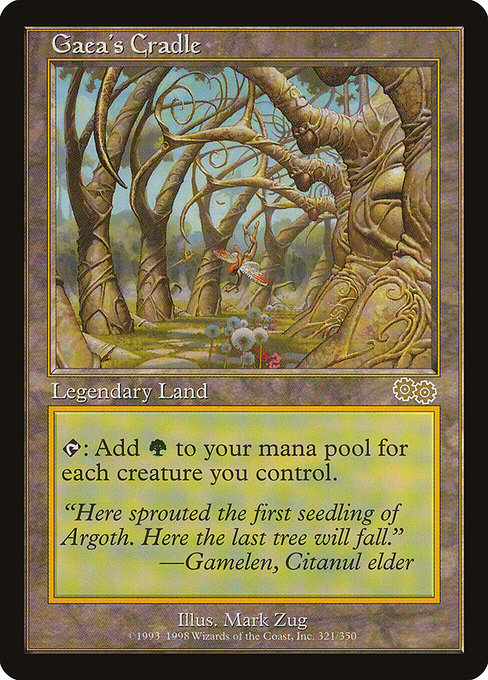 : Add
: Add  for each creature you control.
—Gamelen, Citanul elder
3) Burst mana spells and engines
- Jeska’s Will
- “I made 10 Treasures” turns (the specific cards change, but the pattern doesn’t)
Why Fast Mana Is a Pod Problem (Not Just a Deck Problem)
Fast mana doesn’t just make you faster. It changes:
- Threat pacing: you present game-ending lines while others are playing taplands.
- Interaction requirements: now the table needs cheap answers immediately or they die.
- Social feel: the game becomes “stop that player” by default.
And if one deck has it and the others don’t, it creates the worst kind of power mismatch: the game ends before it starts.

What’s Banned, What’s Legal, and What’s a “Game Changer” (As of Feb 2026)
Two important context points for any fast mana policy:
Some famous fast mana is currently banned
Notably, Mana Crypt and Jeweled Lotus are banned in Commander (along with Dockside Extortionist), with the bans framed around reducing extremely explosive early starts.
So if your policy conversation begins with “Are we okay with Mana Crypt?” the answer in a default Commander game is “It’s not legal unless your group explicitly agrees to change that.”
The bracket framework treats certain fast mana as “game changers”
The bracket write-up includes a “Game Changers” list that calls out specific fast mana pieces such as Chrome Mox, Grim Monolith, Mox Diamond, Mana Vault, and Ancient Tomb.
It also goes out of its way to explain why Sol Ring is treated as a cultural exception.
You don’t have to use brackets to benefit from this framing. It’s basically a pre-made vocabulary for “this card makes the game feel different.”
Four Fast Mana Policies That Actually Work
Pick one. Say it out loud. Save 40 minutes of awkwardness later.
Policy 1: “Anything legal goes”
Best for high-power pods that expect explosive starts.
- Pros: nobody has to swap cards, games are sharp and fast
- Cons: precon-level decks get obliterated, and some games are coin flips of opening hands
Policy 2: “Sol Ring only”
Best for casual tables that still want Commander to feel like Commander.
- Pros: keeps the iconic one-card spike without turning games into drag races
- Cons: people with higher-power decks may need to retune, and Sol Ring starts still happen
Policy 3: “No mana-positive rocks”
Define mana-positive as “produces more mana than it costs in the early game.”
- Pros: removes the most egregious “oops I’m two turns ahead” openings
- Cons: still allows fast lands and burst mana unless you also address them
Policy 4: “Cap system”
Examples:
- “Max 1 fast mana piece besides Sol Ring.”
- “Max 3 total from a listed group (Ancient Tomb, Mana Vault, Mox Diamond, Chrome Mox, Grim Monolith, LED).”
This works great for regular groups because it’s flexible. It also requires trust and honesty, which is very Commander.
Copy/Paste Fast Mana Script for Rule 0
Use this exactly as written if you want:
Quick check: what’s our fast mana policy?
- Sol Ring okay?
- Any mana-positive rocks like Mana Vault / Mox Diamond / Chrome Mox?
- Fast mana lands like Ancient Tomb?
I’m good matching whatever the table wants, I just don’t want surprise blowouts.
If you want a full set of prompts, use: MTG Commander Pregame Scripts: Copy/Paste Rule 0 Prompts for Any Pod.
How to Tune Your Deck After the Policy
This part matters. If you ban fast mana but keep your deck built like it still exists, you’ll get clunky games.
- Less fast mana: raise land count slightly if needed, make sure your ramp is mostly 2 mana, and lower your reliance on “early commander or bust.”
- More fast mana allowed: increase cheap interaction, and don’t pretend a 5-mana durdle enchantment is safe on turn 3.
FAQs
Is Sol Ring fast mana?
Yes. It’s also treated as a special case culturally, and even official commentary acknowledges it as iconic and not a target for banning despite meeting the criteria.
Why did Mana Crypt and Jeweled Lotus get banned?
The ban rationale focused on reducing extremely explosive early starts and the frequency of “skipping the early game” into snowball wins.
Should casual pods ban Ancient Tomb?
If your pod is mostly precon to upgraded mid-power, it’s a reasonable restriction. It’s a turn-1 jump in a format where early turns are supposed to be setup.
Wrap Up
If your pod decides nothing about fast mana, you’re agreeing to the default policy of “I hope we all brought similar decks,” which is optimistic in the way that only Commander players understand.
Set the policy up front. Then shuffle like adults.