

Someone says “it’s like a 7,” someone else says “same,” and then on turn four a player casts three spells that cost zero mana and the table learns what “7” means in that person’s heart.
Let’s fix it with a checklist that predicts what the game will actually feel like.
TL;DR
- Stop using 1-10 numbers. Use specifics: speed, tutors, combos, stax, and interaction.
- Ask five questions that map to gameplay, not vibes.
- Give your deck a one-line “label” people can react to fast.
- Your “keepable” hands and mulligans change a ton with pod speed (link this with your mulligan guide).
What “Power Level” Really Means in Commander
In Commander, “power level” is not your deck’s price tag or how salty your cards are.
It’s a prediction of two things:
- How fast your deck gets online
- How hard it is to stop once it is online
If you can describe those clearly, you can sit down with strangers and have a real game instead of a surprise.
The 5-Question Power Level Checklist
Question 1: How fast do you consistently do something scary?
“Scary” does not have to mean “win.” It can mean:
- a game-warping engine (huge card draw, oppressive board presence)
- a commander that starts snowballing
- a protected combo setup
Quick self-check: in goldfish land, what turn are you reliably “the problem” if nobody stops you?
Speed buckets (easy version)
- Turn 1-3: turbo fast
- Turn 4-6: high power pace
- Turn 7+: casual pace (battlecruiser and value piles live here)
Fast mana is usually the biggest lever here: Mana Crypt, Mox Diamond, Jeweled Lotus, and friends push decks into earlier turns fast.
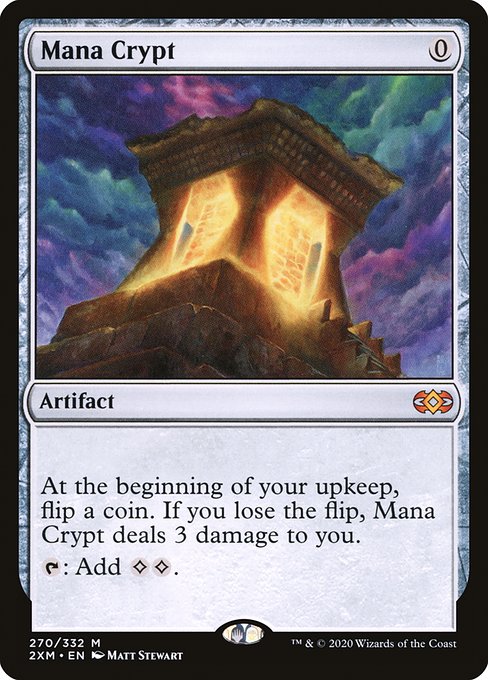

 : Add
: Add  .
.Question 2: How consistent is your deck at finding its best stuff?
Consistency is the quiet difference between “my deck can do the thing” and “my deck does the thing every game.”
Look for:
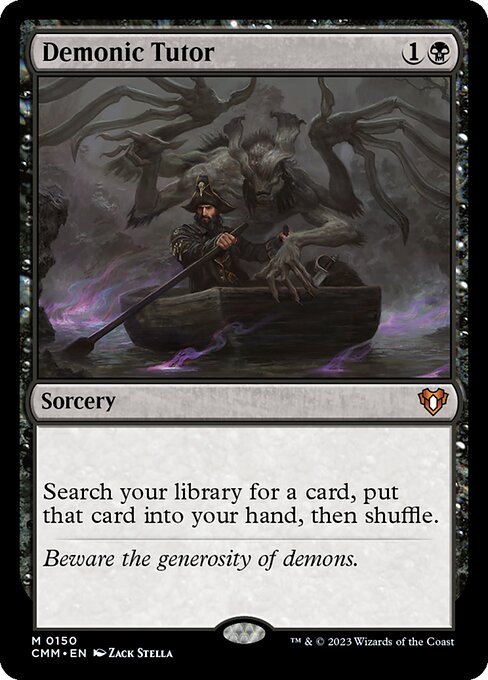
- Tutors (especially cheap ones)
- Redundancy (multiple copies of the same effect)
- Card selection (cantrips, looters, wheels)
- Engines that turn one card into many cards
If your deck has multiple ways to find the same two cards, it plays like a different format.


Question 3: How much cheap interaction do you have?
This is the “can your deck survive at this table” question.
If you are in a faster pod, you usually need:
- 0-1 mana interaction
- 1-2 mana interaction
- ways to protect your own win attempt
Here are common “power signals” people recognize instantly:
- Force of Will
- Fierce Guardianship
- Deflecting Swat
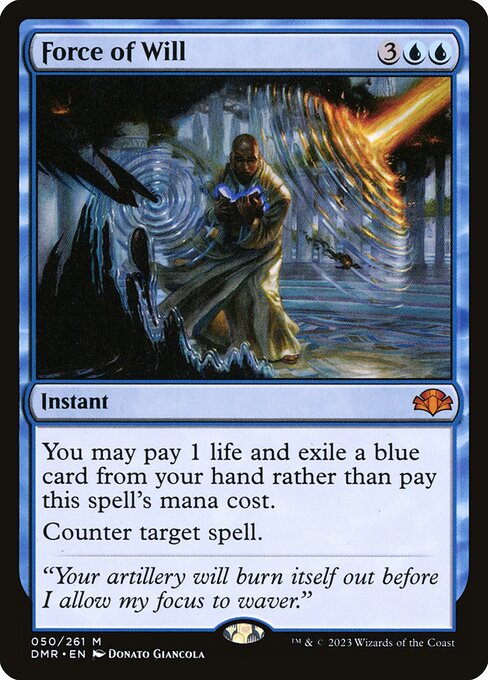


Counter target spell.
A deck with lots of cheap interaction can hang in faster games even if it is not the fastest deck at the table.
Question 4: Do you have “oops, game ends” win lines?
Some decks win gradually. Some decks win suddenly. The second type creates way more mismatches when power level is unclear.
Ask:
- Do you have infinite combos?
- How many pieces are tutorable?
- Can you protect the attempt?
- Do you win with one card resolving, or do you need to build a board first?
A common example people know as a “sudden ending” line is Thassa’s Oracle style wins.
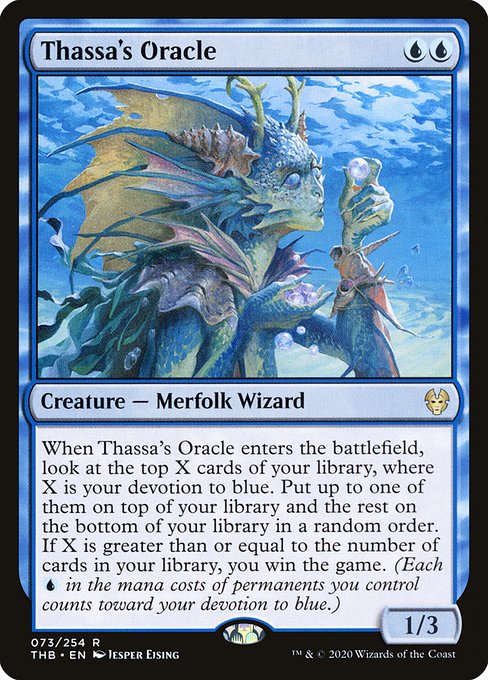 in the mana costs of permanents you control counts toward your devotion to blue.)
You do not need to swear off combos. You just need to describe them honestly.
Question 5: Do you stop other people from playing their decks?
This is where “power” and “fun” overlap the hardest, because these strategies change the whole table’s experience.
You can be a high-power deck without stax. You can also have a medium-speed deck that still makes the game feel locked up because it attacks resources.
Common “table-warping” categories:
- commander shutdown
- mana denial
- repeated tax effects
- hand denial
- extra turns loops
A clean, recognizable example that changes games immediately:
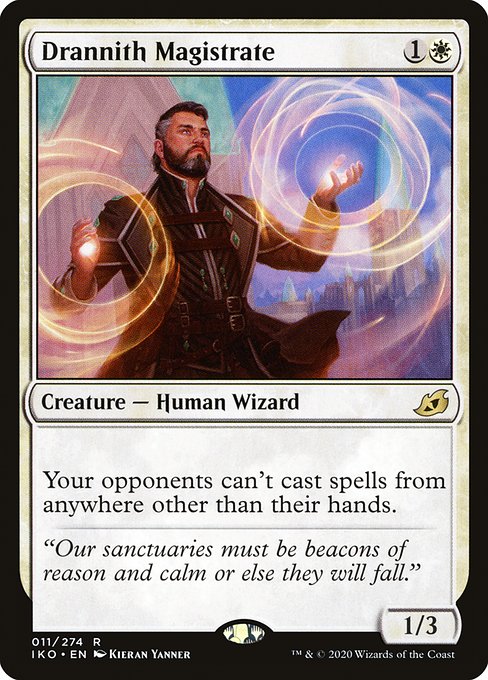

If your deck runs a lot of these effects, the game you are offering is fundamentally different. Some pods love it. Some pods hate it. The important part is telling people up front.
Score It in 60 Seconds (No “It’s a 7” Allowed)
Give each question a score:
- 0: barely present
- 1: present, but not a core plan
- 2: a core plan / frequent
Add them up (0 to 10), then translate into a label people actually understand:
- 0-2: Chill Casual
Slower starts, bigger turns later, wins tend to be board-based. - 3-5: Upgraded Casual
Some fast starts, some tutors, some combos, but not constant. - 6-8: High Power
Efficient mana, strong tutors, compact win lines, real interaction. - 9-10: Competitive (cEDH pace)
The deck is built to win fast through resistance.
This is not a moral ranking. It is just the best shortcut I know for “what kind of game are we about to play?”
The One-Line Deck Description That Works at Real Tables
Instead of a number, say one sentence with the five questions baked in:
Template
- “This is [label]. I can be online by turn X. I run [how many tutors] and [combo yes/no]. I have [interaction count vibe]. I do or do not play stax/extra turns/MLD.”
Examples you can steal
- “Upgraded casual. Online around turn 6. A couple tutors, no infinites. Normal removal suite. No stax or extra turns.”
- “High power. I can threaten wins turn 4-6. Multiple tutors, one compact combo. Lots of cheap interaction. No hard locks.”
- “Stax-leaning midrange. Slower win, but I tax mana and shut off some strategies. If that’s not the vibe, I can switch.”
If you want to mention mana rocks as part of your speed, most people understand a baseline like Arcane Signet without it sounding like a flex.
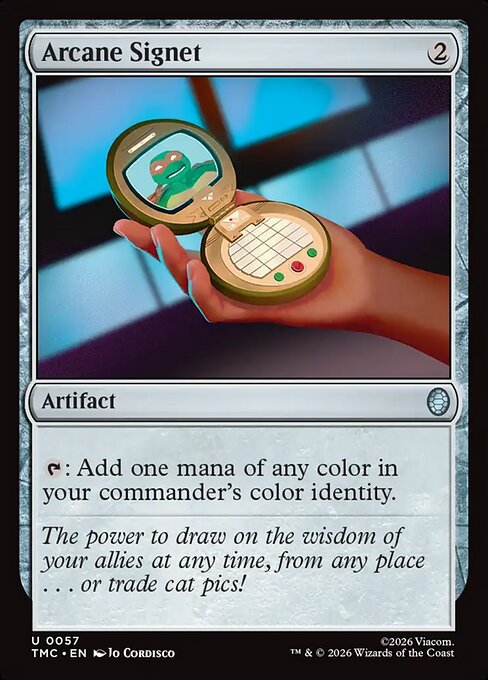
 : Add one mana of any color in your commander's color identity.
How This Connects to Mulligans (Why Pods Feel “Off”)
Here’s the sneaky part: power level changes what hands are keepable.
In a chill pod, a hand that starts on turn 3 is fine. In a high-power pod, that hand is basically a mulligan, even if it technically casts spells.
So if your games keep feeling lopsided, it might not be your deck “strength.” It might be that your deck is mulliganing for a totally different speed than the table.
https://commanderproxies.com/product/kaalia-commander-proxy-deck/
Common Power Level Mistakes (That Cause Most Mismatches)
Mistake 1: Using price as a power description
Expensive cards can be slow, and cheap cards can be terrifying. Describe play patterns, not the receipt.
Mistake 2: Saying “no combos” when you have combo finishes
If your deck can end the game suddenly, just say it. People can adapt if they know.
Mistake 3: Hiding the “feel-bad” levers
Extra turns, stax, and mass resource denial are not automatically wrong. They are just high-impact on the table experience. Mention them.
Quick Tuning Knobs (If You Want to Match a Pod)
If you are consistently too fast for your group:
- cut fast mana first
- reduce tutor density
- swap compact combos for board-based wincons
- increase “fair” engines and midgame plays
If you are consistently too slow:
- clean up your early mana (more untapped sources, more 2-mana ramp)
- add cheap interaction
- tighten your win condition package so you can actually close
This is also where your “MTG Commander Tutors” article fits perfectly. Tutors are one of the biggest consistency levers in the whole format.
FAQs
Is “everything is a 7” actually a problem?
Yes, because “7” can mean “upgraded precon” to one player and “high power combo” to another. The number is not shared language anymore. Specifics are.
Does Sol Ring automatically mean high power?
Not by itself. It is a strong card that increases early speed, but the deck’s overall plan (tutors, combos, interaction, lock pieces) matters more.
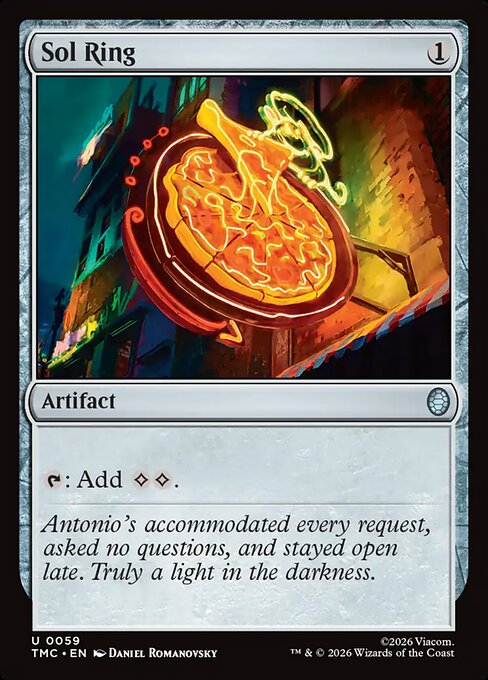 : Add .
How many tutors makes a deck “high power”?
It depends on the tutors. A couple slower tutors in a midrange deck is different from multiple cheap tutors finding the same two-card win every game. Describe the effect: “I run a few tutors, mostly for value,” versus “I run several tutors to assemble a combo.”
What if my deck is high power but my friends are casual?
Bring a second deck or have a quick swap package (remove fast mana and the tightest win line). Most mismatches get solved by switching decks, not arguing about numbers.
What should I ask a random pod at an LGS?
Try this: “What turn do games usually end here, and are we cool with combos and stax?” Then match that.