

You know the feeling: you sit down for “a chill game,” then someone goes land, rock, rock, and the table collectively realizes you brought a butter knife to a chainsaw party.
TLDR
- “Tuning down” isn’t making your deck worse, it’s making it less explosive and less consistent while keeping the fun core intact.
- The biggest power knobs are fast mana, tutors, free interaction, compact wincons, and lock pieces.
- Start by choosing a target (casual, upgraded, high-power) and cut the stuff that causes non-games first.
- Swap down in speed and redundancy, not in basic functionality (don’t cut lands or all your removal).
- After tuning, say what changed in Rule 0 so your pod can trust your “this is lower power now” claim.
What “Tune It Down” Actually Means in Commander
“Tune it down” in MTG Commander means lowering your deck’s ceiling (how unfair it can get) and smoothing out the “oops I ran away with it” hands, without deleting the personality that made you build it in the first place.
If your deck currently wins by doing The Thing on turn 5 with protection up, tuning down usually means it still does The Thing, just later, and with more give-and-take.
Also, this is not the same as “make it jank.” A tuned-down deck should still be coherent. It just shouldn’t feel like you’re speedrunning a casual pod.
Internal links (related MTGEDH reads):
- MTG Commander Rule 0: The Pregame Talk That Actually Works
- MTG Commander Power Levels Explained: Why “7” Means Nothing
Step 1: Pick Your Target (Or You’ll Just Randomly Nerf Stuff)
Before you swap a single card, pick what kind of game you’re tuning for. If you don’t, you’ll end up doing the classic move: cutting two good cards, keeping the truly busted ones, and then wondering why everyone still sighs when you reveal your commander.
A quick “target” framework:
- Casual / precon-adjacent: longer games, big spells resolve, combos are rare or clearly telegraphed.
- Upgraded mid-power: synergy is strong, interaction is real, wins happen but usually not out of nowhere.
- High-power (not cEDH): fast starts exist, tutors exist, combos exist, people brought their seatbelts.
If you’re using the newer bracket language at your tables, tuning down often means “fewer or zero ‘game changer’ style cards and fewer ‘I win now’ moments.”
Internal link you’ll actually use:
Step 2: Turn the Five Real Power Knobs (In Order)
Most Commander power comes from a small set of repeat offenders. Start here, because these swaps give you the biggest change per card.
Power Knob #1: Fast Mana (The Non-Game Starter Pack)
Fast mana isn’t “ramp.” Ramp is Cultivate. Fast mana is “I skipped the early game.”
If your goal is fewer blowouts, this is the cleanest place to start.
Common fast-mana culprits (legal as of early 2026):
- Mana-positive rocks: Mana Vault, Grim Monolith, Mox Diamond, Chrome Mox, Lion’s Eye Diamond
- Lands that jump you ahead: Ancient Tomb, Gaea’s Cradle (also a “game changer” style card)
- Burst mana spells: Jeska’s Will, ritual effects in the right shells
Note: some of the most infamous accelerants (Mana Crypt, Jeweled Lotus) are banned in Commander, so if those are in your deck, the “tune down” is easy: remove them because you have to.
Easy swaps that keep your deck functioning:
- Replace Mana Vault with Mind Stone, Fellwar Stone, Talisman cycle, Thought Vessel
- Replace Ancient Tomb with a utility land that doesn’t jump you two turns ahead
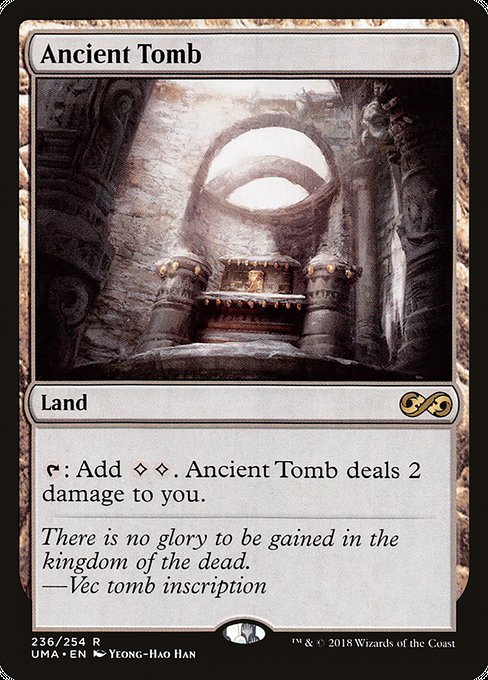
 : Add
: Add  . This land deals 2 damage to you.
—Vec tomb inscription
Power Knob #2: Tutors (Consistency Is Power)
Tutors are where “my deck does a thing” becomes “my deck does the same thing every game, right on schedule.”
If you want to lower power without gutting the deck, reduce tutor density first, especially the “best-in-class” ones.
Tuning swaps:
- Replace unconditional tutors (Demonic Tutor, Vampiric Tutor, Enlightened Tutor, Mystical Tutor) with:
- slower tutors (Diabolic Tutor, Final Parting, Increasing Ambition)
- narrower, theme-based tutors (tribal, enchantment-only, artifact-only)
- or just… more draw
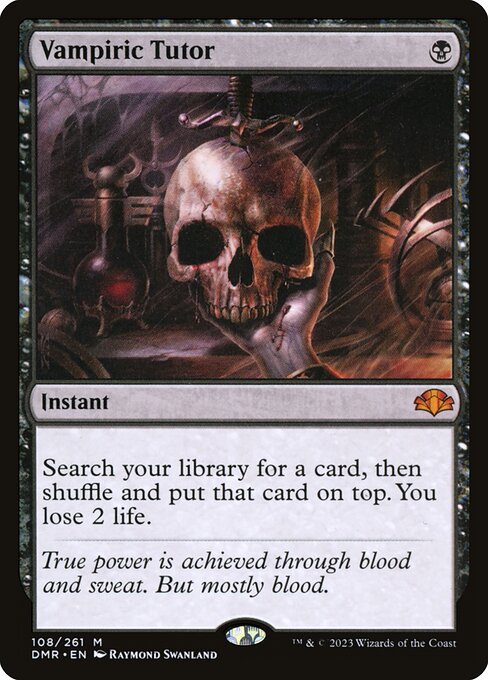 Vampiric TutorMana Cost:
 CMC: 1MythicType: InstantDescription:Search your library for a card, then shuffle and put that card on top. You lose 2 life.Flavor Text:True power is achieved through blood and sweat. But mostly blood.
You’ll still get to your cards, just not with GPS turn-by-turn directions.
Power Knob #3: Free Interaction (Protection With No Tempo Cost)
Free counterspells and free protection are a big reason high-power decks can safely push early wins.
Examples:
- Force of Will, Fierce Guardianship, Deflecting Swat, Deadly Rollick
If you remove a few of these, your deck can still be interactive, but it can’t force through nonsense while tapped out.
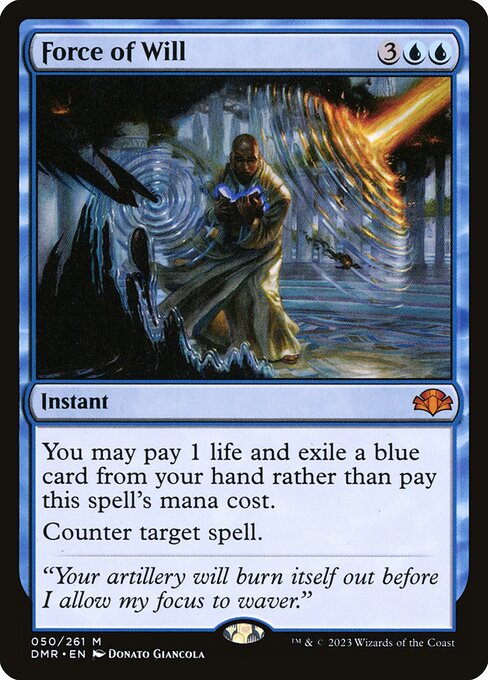

Counter target spell.
Tuning swaps:
- Replace free counters with honest ones: Negate, Arcane Denial, Swan Song (still efficient), Disdainful Stroke
- Replace free protection with mana-up protection: Heroic Intervention, Tamiyo’s Safekeeping, Flawless Maneuver (still free sometimes, so choose based on target power)
Power Knob #4: Compact Wincons (Two Cards, Game Over)
A big “feel-bad” in casual is not losing, it’s losing suddenly with no meaningful window to respond.
The bracket framework explicitly calls out two-card infinite combos as a major expectation divider between casual and optimized play.
Tuning swaps:
- Keep combos, but make them:
- 3 pieces instead of 2
- sorcery speed instead of instant-speed
- board-dependent instead of “two cards in hand, good luck”
- Or pivot to finishers that end games the old-fashioned way: combat math and poor life choices.
Power Knob #5: Lock Pieces (The Fun Tax)
Stax and hard locks can be totally valid, but they are also one of the fastest ways to create salt and table avoidance.
If you’re trying to lower power for broader pods, consider trimming:
- Drannith Magistrate, Opposition Agent, Trinisphere, heavy mass mana denial lines
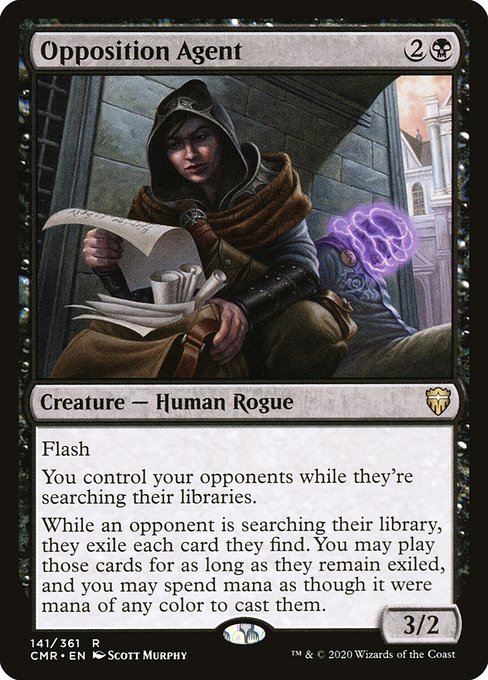
You control your opponents while they're searching their libraries.
While an opponent is searching their library, they exile each card they find. You may play those cards for as long as they remain exiled, and you may spend mana as though it were mana of any color to cast them.
Step 3: Use a “Swap Package,” Not Random Nerfs
Here are three practical packages. Pick one based on how far you need to go.
Package A: Gentle Nudge (5-8 cards)
Best when you’re “a little too hot” for your regular group.
- Cut 2-3 fast mana pieces
- Cut 2-3 unconditional tutors
- Cut 1-2 free interaction pieces
- Add 2-3 mid-cost draw engines and 2-3 fair rocks
Package B: Real Tune-Down (10-15 cards)
Best when you’re moving from high-power to upgraded mid-power.
- Cut most mana-positive rocks (keep normal 2-mana rocks)
- Cut most top-tier tutors
- Replace your fastest wincon with a slower finisher
- Keep interaction, but make it more mana-honest
Package C: Hard Reset (15-25 cards)
Best when you want the deck to sit comfortably near precons.
- Remove fast mana beyond Sol Ring
- Remove compact “assemble and win” lines
- Keep your commander theme, but lower redundancy
- Add splashy, higher-mana payoffs so the deck still feels fun
The 15-Minute Tune-Down Checklist
If you want a quick process that works:
- Circle your “explosive start” cards (fast mana, burst mana).
- Count your unconditional tutors. If it’s more than 1-2 in a casual deck, that’s probably the whole problem.
- Identify your fastest win (what’s the earliest goldfish win?).
- Pick 8-12 cards to swap using one package above.
- Play one game and track: Did you still do your deck’s thing? Did the game feel fair?
- Tell the table what you changed in Rule 0.
Common Mistakes When Lowering Power
- Cutting lands instead of power. That just makes you mana screwed and cranky.
- Cutting all interaction. Then you don’t “tune down,” you just lose to the first reasonable engine.
- Keeping the busted consistency pieces. If you kept the best tutors and fastest mana, the deck didn’t really change.
- Overcorrecting into “bad cards only.” The goal is fun games, not self-punishment.
FAQs
How many cards do I need to change to actually feel it?
Usually 8-15 meaningful swaps is enough if you hit fast mana and tutors first.
Can I keep combos and still be “lower power”?
Yes. Make them slower, less compact, more interactable, and disclose them up front.
Is Sol Ring “too strong” for casual?
It’s absolutely fast mana, and it’s also deeply baked into Commander culture. Even official commentary has treated it as a special case.
If your group hates it, that’s a totally reasonable house rule, just agree up front.
Wrap Up
If you remember one thing: tune down your deck by lowering its early acceleration and consistency, not by removing the fun cards that define it. Cut fast mana, trim tutors, slow the win, keep the identity.