

You know that feeling when you swing with a random 2/2… and suddenly you are holding up extra mana like you planned it all along? Firebending is that, except it hands you red mana in the middle of combat and says, “Cool, now spend it before it evaporates.”
TLDR
- Firebending gives you red mana when your creature attacks, and you can spend it anytime during combat, but it normally disappears before your second main phase.
- The best “firebending mana” payoffs are: combat blowouts, instant-speed protection, and repeatable mana sinks you can activate mid-combat.
- If you want firebending to feel like real ramp, add mana banking pieces like Leyline Tyrant, Horizon Stone, or Ozai, the Phoenix King.
- Build your deck so you always have something useful to do in combat, not just “hope I draw an instant.”
- If you are brewing from scratch, check MTGEDH.com’s How to Build a Commander Deck, and if your table argues about “how strong is this,” reference Commander power levels and brackets on MTGEDH.com.
What Is Firebending Mana (and why it matters in Commander)?
Firebending is a keyword with a number. When a creature you control with firebending attacks, you add that much red mana. That mana sticks around through the combat steps, so you can use it before blocks, after blocks, after damage, and in end of combat.
The catch is brutal and simple: if you do not use it during combat, it is usually gone by the time you hit your second main phase. So your deck wants a real concentration of “combat-speed” plays, not just a couple of instants and a prayer.
One more important rules-ish note: firebending triggers use the stack and can be responded to. It is not a mana ability. That matters for corner cases, but for deckbuilding it mostly means “yes, people can interact with your engine.”
The Firebending Rule of Thumb (so the mana never goes to waste)
If you remember one thing, make it this:
Every firebending deck wants at least one payoff in each bucket:
- Combat blowouts (you spend 1–4 mana and somebody dies)
- Protection (you keep the firebender alive long enough to get paid again)
- A repeatable mana sink or bank (so extra mana always turns into value)
When you consistently have all three, firebending stops being “cute combat mana” and starts being “my combat step is a resource.”
https://magic.wizards.com/en/news/feature/avatar-the-last-airbender-mechanics
Combat blowouts that love firebending mana
These are the spells that make opponents regret letting you go to combat with open mana, even if your lands are tapped.
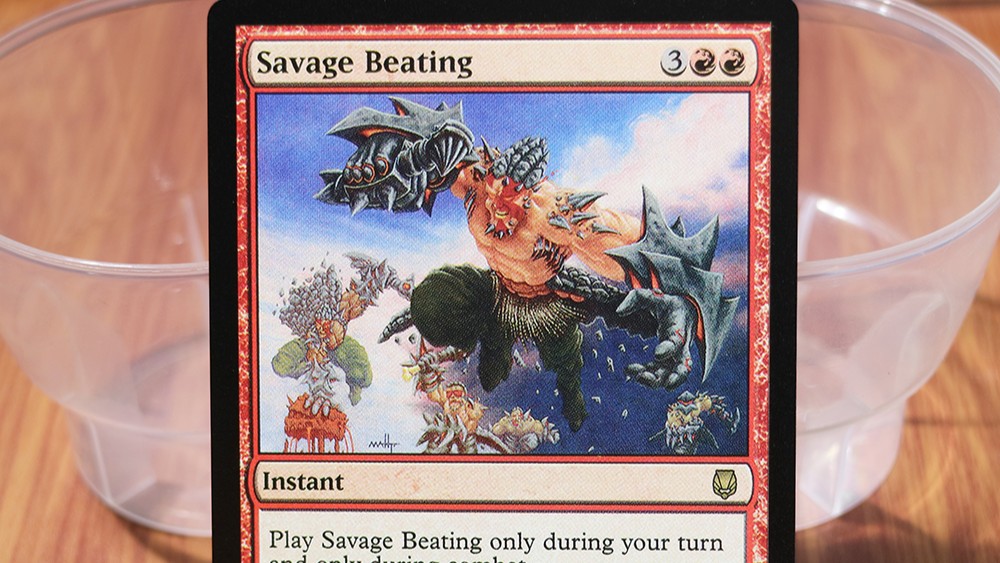
Savage Beating
This is one of the cleanest “combat only” haymakers ever printed. It is literally restricted to combat on your turn, and firebending helps you hit entwine or keep up interaction while still representing the blowout. Extra combat plus double strike ends games fast.
Embercleave
Embercleave already rewards you for attacking, and it has flash, so it naturally lines up with firebending. The best part is the timing: you can declare attacks, get your firebending trigger, then drop Embercleave where it hurts most. Surprise math is the best math.
Dictate of the Twin Gods
Flash damage doublers are a special kind of evil (the fun kind). Dictate lets you turn a normal combat into lethal out of nowhere. It is also a political nuke: sometimes you cast it to force the table into chaos, then you are the only one prepared to capitalize.
Protect the firebender (because dead benders do not make mana)
In Commander, the first time you “do the thing,” somebody is going to try to remove the thing. If your firebending creature is your engine, protection is not optional.
Mithril Coat
Flash, attaches itself to a legendary creature, and gives indestructible. This is exactly what you want when your commander is the firebending source. Hold up mana, threaten interaction, then if nothing happens, you still get to deploy protection at instant speed.
Celestial Armor
Also has flash and attaches on entry, giving your creature hexproof and indestructible until end of turn. In practice, this often reads “counter their removal spell, keep attacking, keep getting paid.”
Silver Shroud Costume
Flash, attaches immediately, and gives shroud until end of turn. It is a one-turn protection button that also makes your creature unblockable once it is equipped. That is extremely on-plan when your “mana ritual” is stapled to an attacker.
Repeatable mana sinks you can use during combat
You will not always have the perfect instant. Repeatable sinks mean your firebending mana is never truly dead.
Pyrohemia
Pyrohemia is a mana sink that doubles as board control and a combat manipulator. One red mana at a time, you can shrink blocks, finish creatures after damage, or punish token boards. It is especially spicy in decks that can keep a creature around reliably so you do not have to sacrifice it.
Olivia Voldaren
Olivia is a classic mana sink commander card for a reason. Firebending gives you extra fuel to ping creatures, grow Olivia, and set up the “steal your Vampires” plan over multiple turns. She is slower than the pure combat blowouts, but she turns extra mana into inevitability.
Insight Engine
Sometimes you just want your spare combat mana to become cards. Insight Engine is an activated ability that scales: the first activation is fine, and later activations get absurd. Firebending mana is perfect for “I have 2–3 extra mana mid-combat, might as well turn it into gas.”
Card advantage at instant speed (the best way to not run out of stuff)
Firebending pushes you toward proactive combat, but you still need to reload. These plays turn “extra combat mana” into “more Magic cards.”
Commune with Lava
This is the poster child for converting spare mana into future turns. It is an instant, it scales with X, and it effectively says: “Cool combat step, now let me see a pile of new options.”
Tectonic Reformation
Aggro decks flood. Commander decks flood. Firebending decks that want to keep attacking definitely flood. Tectonic Reformation fixes that problem in the most red way possible: turn lands into cycling. It also gives you something to do with a single extra red mana that would otherwise burn out at end of combat.
Mana banking (aka turning firebending into real ramp)
If you want to get greedy, this is how you do it. Mana banking effects let you keep unspent mana as steps and phases end, which means firebending stops being “combat-only” and starts funding your second main phase and future turns.
Leyline Tyrant
A flying Dragon that lets you keep unspent red mana. That is already strong. With firebending, it gets silly: your combat step becomes a deposit, and your main phase becomes the withdrawal.
Horizon Stone
If you would lose unspent mana, it becomes colorless instead. That turns “use it or lose it” into “store it,” and it works with any mana you make, not just red. Firebending mana becomes a steady stream of future resources.
Ozai, the Phoenix King
Ozai brings firebending 4, haste, and a built-in mana banking effect that turns unspent mana into red instead of losing it. Translation: Ozai is both the engine and the payoff. If you are trying to play “big firebending,” Ozai is one of the cleanest ways to do it.
Bonus: make more firebending mana in the first place
This is not “spending the mana,” but it is the fastest way to make your payoffs lethal.
Windcrag Siege (Mardu mode)
Mardu mode doubles triggered abilities caused by creatures attacking. Firebending is an attack trigger, so yes, it gets copied. If you are in Boros or Mardu firebending shells, this card is a problem (for your opponents).
FAQs
Can I use firebending mana in my second main phase?
Normally, no. Firebending mana is meant to last through combat and then disappear before your second main phase. If you control an effect that prevents you from losing unspent mana (or converts it instead), you can keep it.
When exactly can I spend firebending mana?
Any time during combat. That includes before blockers, after blockers, after combat damage, and in the end of combat step.
Is firebending a mana ability? Can opponents respond to it?
No. Firebending triggers use the stack, so players can respond.
Do multiple instances of firebending stack?
They trigger separately. If a creature has multiple instances, you get multiple triggers and multiple batches of mana.
Does firebending work with extra combats?
Yes, but the practical answer depends on whether you stay in combat or get an extra main phase in between. If you leave combat, you usually lose the firebending mana unless you have a mana banking effect.
Wrap Up
Firebending mana is only as good as your ability to spend it. If your deck is built right, every combat step becomes a menu: blow someone out, protect your engine, or convert spare mana into long-term value.
If you remember one thing, make it this: firebending is not ramp unless you build it like ramp. Give yourself enough combat-speed options that the mana always matters, and your “attack step ritual” will start feeling downright unfair.
https://magic.wizards.com/en/news/feature/avatar-the-last-airbender-release-notes