
Tarkir is back, dragons are back, and the set somehow managed to give us “big flashy moments” and “actually interactive gameplay” in the same booster. It’s kind of rude how much fun that is.
TLDR
- If you want low-risk interaction that never feels dead, start with Heritage Reclamation and Fangkeeper’s Familiar.
- If you want “wait, what just happened?” blowouts, New Way Forward is your new favorite memory (and your opponent’s new least favorite).
- If you like playing from the graveyard without turning the game into a dissertation, Auroral Procession and Songcrafter Mage are clean, skill-testing tools.
- If you want to make the table read your card twice, Rot-Curse Rakshasa does that, and then does it again from the graveyard.
- If you sleeve up Teval, Arbiter of Virtue, you are choosing violence (and also choosing to track your life total like it owes you money).
Related on MTGEDH.com: How to Build a Commander Deck and Top Burn Spells in EDH for MTG (both are especially relevant once we start talking about copying spells and choosing modes).
How I picked these cards (what “interactive” means here)
This isn’t “the 10 strongest cards” or “the 10 cards most likely to get you archenemied on sight” (though… a couple are trying their best).
For Commander and EDH, “interesting and interactive” usually means at least one of these:
- Creates decisions: timing windows, target choices, mode choices, political leverage.
- Invites responses: opponents can play around it, answer it, or negotiate with it.
- Plays well at a real table: not pure chaos, not solitaire, not “oops I win” with no warning.
So you’ll see flexible answers, clever recursion, and a few cards that weaponize combat, the graveyard, or both.
Honorable mention: Omen
Omen is the set’s coolest “wait, that’s a what now?” mechanic.
An Omen card is basically a Dragon with a built-in instant or sorcery spell tucked into the lower-left corner. When you cast it, you choose whether you’re casting the Dragon or the Omen spell. The big difference from Adventure is the payoff loop: if the Omen spell resolves, it shuffles back into your library instead of sitting in exile waiting to be cast as the creature later.
Why that matters in Commander:
- It turns Dragons into early-game utility without being dead draws later.
- It creates soft inevitability. Your table has to respect the fact that the “little spell” you fired off might show up again later… attached to a dragon body.
- It also makes threat assessment weird in a fun way. “Is that just a cantrip? Or is that the prelude to a 6-drop dragon entering next turn?”
Two great examples of “Omen doing Omen things”:
- Sagu Wildling is a totally fine midrange Dragon… but the Omen half Roost Seek turns it into early fixing so you can keep a sketchy hand without lying to yourself.
- Marang River Regent is already a beefy flyer with an ETB bounce clause, and the Omen half Coil and Catch is a big draw-and-discard effect that can loop back into your deck to be seen again later.
If you like gameplay where the same card can be “mana smoothing,” “interaction,” or “a threat,” Omen is your mechanic.
The list
10) Heritage Reclamation
What it does: A two-mana green instant with three choices: pop an artifact, pop an enchantment, or exile a graveyard card and draw a card.
Why it’s interactive: It’s the rare kind of “utility removal” that doesn’t rot in your hand. If nobody is presenting a good artifact/enchantment target, you can still interact with a graveyard plan and replace the card. That’s the dream for Commander, where you want to hold up answers without feeling like you took a whole turn off.
Where it shines
- Pods with a lot of value engines (enchantments, artifacts) and incidental graveyard nonsense.
- Green decks that want flexible interaction without loading up on narrow hate.
Watch out for
- If you choose the “exile from graveyard + draw” option, you still want to pick a legal target, or you risk losing the whole spell if the target goes invalid.
9) Flamehold Grappler and Mardu Siegebreaker
I’m cheating and putting two cards in one slot because they’re both doing the same thing in different flavors: doubling your next action, then asking the table, “Do you have it?”
Flamehold Grappler
What it does: A Jeskai creature that copies the next spell you cast that turn (not just instants and sorceries).
That “next spell” line is the whole reason it’s here. Copying a ramp spell, a removal spell, a draw spell, a threat, a planeswalker, a weird enchantment… it’s all on the menu. And because the copy happens when you cast the spell, you can set up some nasty sequencing.
Where it shines
- Jeskai spellslinger shells that already want to cast multiple spells in a turn.
- Blink or bounce lines that can reuse the ETB.
Mardu Siegebreaker
What it does: A hasty Mardu creature that exiles one of your other creatures when it enters. When it attacks, you make a tapped, attacking token copy of the exiled creature for each opponent, then you sacrifice those tokens later.
This is the kind of card that makes combat feel like a system you can exploit, not just “turn things sideways.” It’s also a great politics card. You can pick a “reasonable” creature to copy for value, or you can pick something that makes everyone immediately start counting damage.
Where it shines
- Isshin, Two Heavens as One is the obvious sicko mode choice, because doubling attack triggers gets silly fast.
- Any Mardu deck that wants aggressive pressure plus ETB value.
Watch out for
- Those token copies enter attacking, but they were not declared as attackers, so you don’t get every “whenever a creature attacks” trigger you might dream about.
8) Auroral Procession
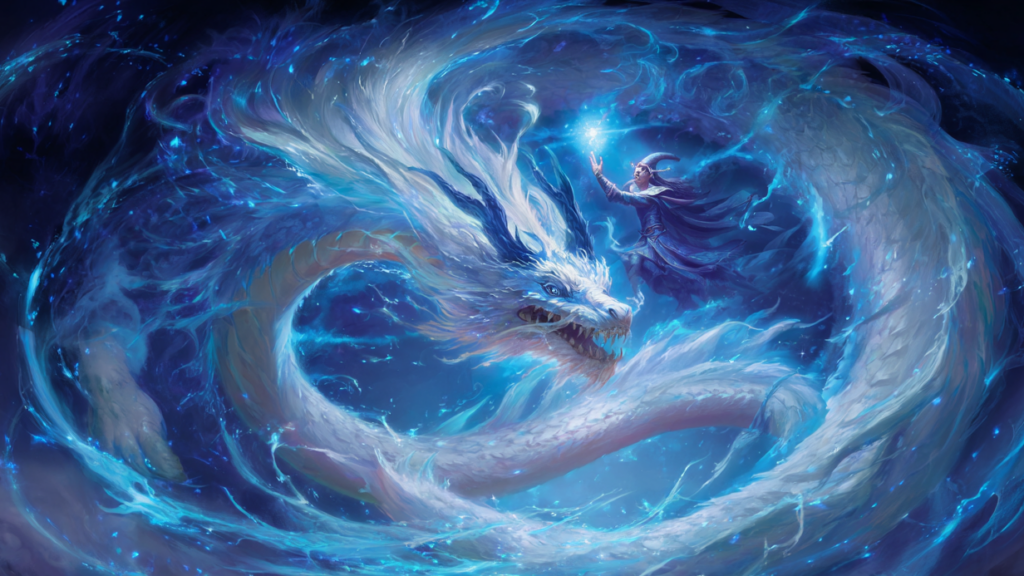
What it does: A Simic instant that returns any card from your graveyard to your hand.
That’s it. No conditions. No “only a permanent,” no “only a creature,” no “mill two then maybe.” Just “get your best card back,” at instant speed.
Why it’s interactive: It turns “holding up mana” into a win-win. You can pass with counterspell mana or removal mana, and if nothing worth answering happens, you cash it in at end step to rebuy a key piece.
Where it shines
- Midrange and control Commander decks that want to play at instant speed.
- Any deck that wants redundancy for a single key card (combo pieces, engines, protection).
Watch out for
- It’s a recursion spell, not a free roll. If your graveyard gets exiled, this gets worse fast. Respect the hate.
https://magic.wizards.com/en/news/feature/tarkir-dragonstorm-mechanics
7) Disruptive Stormbrood (plus Petty Revenge)
What it does: A Dragon that ETBs to destroy an artifact or enchantment, with an Omen half that destroys a small creature (power 3 or less), then shuffles back if it resolves.
Why it’s interactive: It’s a two-for-one toolbox card. Sometimes you need to snap off an early creature before it snowballs. Sometimes you need to delete the enchantment that’s quietly winning the game. Sometimes you just want a Dragon body later to pressure planeswalkers or life totals.
And because it’s an Omen card, it adds that “looming threat” vibe: the table knows you used the spell half, and now you might just redraw the Dragon later.
Where it shines
- Battlecruiser metas where artifacts and enchantments are basically extra commanders.
- Decks that like flexible, modal-ish cards (without being a 10-line textbox tragedy).
Watch out for
- Petty Revenge is limited by power, so it won’t answer everything. It’s still great, just don’t treat it like “kill target creature.”
6) Teval, Arbiter of Virtue
What it does: A Sultai Spirit Dragon with flying and lifelink that says two wild sentences:
- Spells you cast have delve.
- Whenever you cast a spell, you lose life equal to its mana value.
Why it’s interactive: Teval changes the table’s math. Suddenly your graveyard is mana, your spells are cheaper, and your life total becomes a resource you are actively spending. That forces decisions on both sides: you’re choosing when to go “turbo” and when to slow down, and opponents are choosing whether to pressure your life total, your graveyard, or Teval itself.
Where it shines
- Sultai value decks that fill the graveyard naturally.
- Higher-power pods where turning graveyard into mana is a real advantage.
Watch out for
- The life loss is not a joke. You can cast something huge for cheap, but you still pay the life. If your pod plays aggressive decks, Teval can put you in the danger zone faster than you expect.
5) New Way Forward
What it does: A Jeskai instant that prevents the next time a chosen source would deal damage to you this turn. Then it reflects that damage to that source’s controller, and you draw that many cards.
Why it’s interactive: This is the kind of card that creates stories. Big swing at you? Big burn spell at you? Giant “one-shot” line? You turn it around, punish the controller, and refill your hand like you’re playing a different game.
It also rewards good timing and good reads. You have to pick the right moment, and you have to choose the right source as it resolves.
Where it shines
- Jeskai control and “leave mana open” decks.
- Pods where combat damage and big haymaker spells actually happen.
Watch out for
- If your pod is mostly combo decks that win without dealing damage, this is going to sit there looking smug and doing nothing.
4) Rot-Curse Rakshasa
What it does: A two-mana 5/5 trampler with decayed (can’t block, sacrifices at end of combat after it attacks). Then, from the graveyard, it has Renew that lets you exile it to put decayed counters on X creatures.
Why it’s interactive: It’s “combat manipulation” disguised as a giant undercosted attacker.
- On the front half, it’s an early threat that forces blocks (or forces damage).
- On the back half, it turns into a pseudo-board control tool: decayed counters shut off blocking and threaten to delete creatures if they attack.
It’s also a real table-politics card. You can pick your targets carefully, set up an alpha strike, or selectively make one player’s defensive line crumble.
Where it shines
- Black decks that like the graveyard as a second hand.
- Decks that want to force combat to end games instead of durdling forever.
Watch out for
- Graveyard hate completely changes how scary this card is. If your pod has the usual Commander graveyard tools, plan for that.
3) Magmatic Hellkite
What it does: A four-mana red Dragon that destroys a target nonbasic land an opponent controls. That opponent replaces it with a basic that enters tapped with a stun counter.
Why it’s interactive: Targeted land answers are one of the most controversial things in Commander, but they’re also sometimes necessary. This is the “I’m not trying to ruin your day, I’m trying to stop your Cabal Coffers” version. It hits the problem land, gives a replacement, and adds a tempo tax.
Where it shines
- Dragon decks that want on-theme utility.
- Metas with high-impact nonbasics (big mana lands, utility lands, “oops free zombies” lands).
Watch out for
- Use it responsibly. Commander tables remember land destruction. Even when it’s justified, you want to be clear why you did it.
2) Fangkeeper’s Familiar
What it does: A flash Sultai creature that chooses one on entry:
- gain life and surveil
- destroy an enchantment
- counter a creature spell
Why it’s interactive: It’s a Swiss Army Snake. The modes are all relevant in Commander, and the fact that it’s a creature means you can recur it, clone it, blink it, or just jam it as a value piece.
It’s also great at rewarding discipline. Passing with mana up feels good when you can counter the scary creature, but if nothing happens, you still get to surveil and sculpt your next turns.
Where it shines
- Any Sultai deck that wants to play draw-go.
- Metas with lots of creature threats and enchantment engines.
Watch out for
- It only counters creature spells, not everything. That’s still excellent, just don’t try to stop a big sorcery with it and then look betrayed.
1) Songcrafter Mage
What it does: A Temur flash creature that gives an instant or sorcery in your graveyard harmonize until end of turn (with a harmonize cost equal to its mana cost).
Harmonize, in plain English, is “cast this from your graveyard,” and you can tap a creature you control to reduce the generic portion of that cost by that creature’s power.
Why it’s interactive: This is the rare recursion effect that creates real decisions:
- Which spell is worth rebuying right now?
- Do you tap your biggest creature to discount it, or keep that creature untapped for defense?
- Are you telegraphing the line, or can you do it at the last possible moment because Songcrafter has flash?
It plays differently than Snapcaster-style effects. Instead of pushing you toward cheap interaction, it makes higher-cost spells tempting, because you can discount them.
Where it shines
- Temur spellslinger lists that already want the graveyard stocked.
- Decks that naturally put big creatures on board and want to convert that power into mana.
Watch out for
- You still have to follow timing rules. If you give a sorcery harmonize, you can’t cast it at instant speed just because the creature has flash.
FAQs
Are Omen cards basically Adventure cards?
They’re similar in structure, but functionally different. Adventure exiles itself so you can cast the creature later. Omen shuffles into your library when the Omen spell resolves, so you might see the creature later, but you have to draw it again.
Can I search my library for the Omen spell side?
In most zones (library, graveyard, hand), the card is treated as the creature, not the Omen spell. So “search for an instant” won’t find an Omen card, but “search for a Dragon” can.
Does copying an Omen spell shuffle the copy in too?
Copies of Omen spells follow Omen rules as they resolve, and you still shuffle, even though the copy itself won’t exist afterward.
Is Magmatic Hellkite acceptable in casual Commander?
Usually, if you aim it at high-impact utility lands and your pod is on board with targeted answers. If your group hates any land destruction on principle, this is a quick Rule 0 check.
Is Teval more of a casual commander or a high-power commander?
It can be either, but the ceiling is very high. “All your spells have delve” is inherently explosive. If your pod is lower power, expect Teval to draw attention fast.
What’s the cleanest way to get value from Songcrafter Mage?
Treat it like a flexible “rebuy” tool. Hold it until you know what you need (answer, value, finisher), then use its flash to pick the best target at the last possible moment.
Wrap up
If Tarkir: Dragonstorm did one thing especially well, it’s this: it gave us cards that reward good timing and create decisions, without turning every game into a rules seminar.
If you remember one thing, remember this: the best Commander games aren’t just the ones you win, they’re the ones where the table had chances to respond, pivot, and do something cool. These cards help with that.